Somewhere in the middle of the Indian Ocean, a merchant sailor named Elias watches the radar screen flicker with the steady pulse of nearby vessels. He is thousands of miles from his home in Manila, but right now, his world is shrinking. He is steaming toward a strip of water so narrow that, on a clear day, you can see the jagged cliffs of both Iran and Oman simultaneously. It is the Strait of Hormuz. Twenty-one miles of blue water that effectively functions as the jugular vein of the global economy.
Elias doesn’t care about geopolitical posturing or the abstract "slumping" of Asian markets. He cares about the gray hulls of warships. He cares about the fact that if this passage closes, his ship—and the millions of barrels of crude oil sitting beneath his feet—becomes a floating target or a stranded asset.
This is how a blockade begins. Not with a bang, but with a sudden, suffocating silence in the order books of the world.
The Geography of Anxiety
To understand why the price of a gallon of gas in Ohio or a liter of petrol in Seoul just spiked, you have to look at the map. The Strait of Hormuz is a geographic fluke that dictates the fate of nations. Roughly one-fifth of the world’s total oil consumption passes through this needle's eye every single day.
When the United States military moves into a state of "readiness" to counter a potential blockade, the reaction is instantaneous. It is a biological response in the markets. Fear.
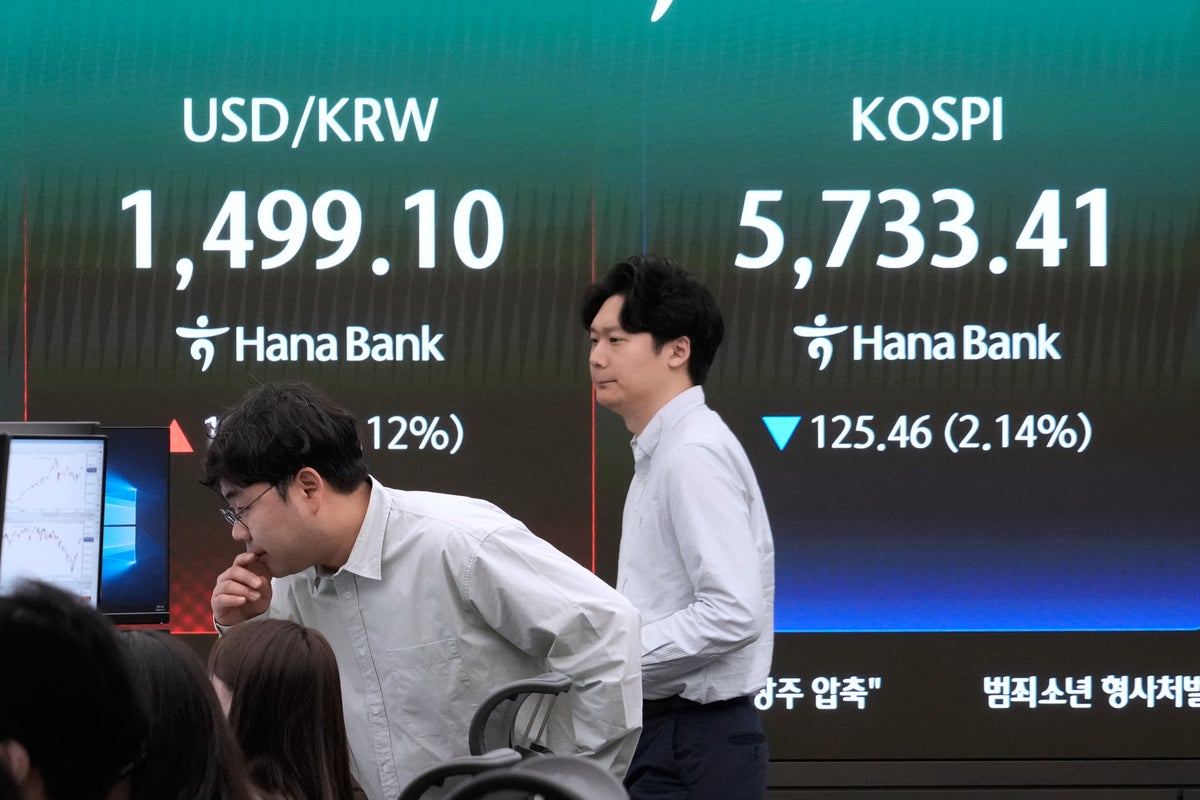
In Tokyo and Hong Kong, the trading floors didn't wait for a formal declaration of conflict. They saw the news of the U.S. positioning assets and they ran. The Nikkei fell. The Hang Seng followed. Why? Because Asia is the world’s largest customer for the oil that flows through Elias’s route. China, India, Japan, and South Korea are tethered to this specific stretch of water. If the tap is tightened by even a fraction, the lights in those manufacturing hubs begin to flicker metaphorically.
Oil is the only commodity that trades on rumors as much as it does on reality. Crude prices didn't jump because there is a shortage of oil today. They jumped because of the possibility that there will be no oil tomorrow. It is a tax on uncertainty.
The Invisible Cost of a Barrier
Imagine a hypothetical small business owner in Singapore named Mei. She runs a logistics firm. For Mei, the "Asian market slide" isn't a headline; it’s a direct hit to her bottom line. When oil prices leap, the cost of every truck delivery she schedules increases. The cost of the plastic packaging she buys for her clients goes up. The ripple effect is relentless.
The blockade isn't just about ships stopped in the water. It’s about the sudden realization that our global "just-in-time" delivery system is incredibly fragile. We have built a high-tech, digital world on top of a physical infrastructure that can be disrupted by a few dozen sea mines or a line of frigates.
Consider the physics of the blockade. If Iran decides to close the Strait, or if the U.S. initiates a "pre-emptive" presence that triggers a standoff, insurance companies are the first to react. The "war risk" premiums for tankers like the one Elias is on skyrocket. Sometimes, the insurance cost alone makes the journey more expensive than the cargo itself.
Suddenly, the oil isn't just physically blocked. It is economically blocked.
The Sound of the Jump
When analysts say "oil jumps," they are using a polite term for a panic.
$80 a barrel becomes $90. $90 becomes $110. These numbers represent billions of dollars being sucked out of the pockets of consumers and into the coffers of speculators and producers. It’s a massive transfer of wealth triggered by a few miles of seawater.
The U.S. "readiness" is a double-edged sword. On one hand, it is meant to signal stability—to show the world that the "police" are on the beat and the lanes will remain open. On the other hand, the mere presence of an aircraft carrier group is a neon sign flashing DANGER. It confirms to the markets that the threat is real enough to warrant billions of dollars in military movement.
The market slide in Asia is the sound of a giant holding its breath. Investors hate variables they cannot control, and a naval blockade is the ultimate "black swan" variable. You can’t model the ego of a general or the hair-trigger temper of a coastal patrol commander into a spreadsheet.
The Human Weight of the Barrel
We often talk about these events as if they are games of chess played by giants. We see the lines on the charts and the "red" across the stock tickers. But the reality is far more intimate.
The weight of this blockade is felt by the commuter in Manila who can no longer afford the bus fare because fuel prices doubled overnight. It’s felt by the factory worker in Vietnam whose hours are cut because the cost of shipping goods to Europe has become prohibitive.
The Strait of Hormuz is a reminder of our shared vulnerability. It is a place where the 21st-century dreams of Silicon Valley and the 19th-century realities of naval power collide. We like to think we have moved past the era where a single geographic point could hold the world hostage. We are wrong.
The tension doesn't just exist in the corridors of power in D.C. or Tehran. It exists in the engine room where Elias works. He hears a change in the vibration of the ship. He wonders if they will be ordered to turn around. He thinks about the sheer volume of energy he is carrying—enough to power a city, or to start a war.
The blockade is a ghost that haunts every gas station and every port. Even if a single shot is never fired, the threat alone has already done its work. It has reached into the future and stolen the stability of the coming months.
Elias looks out at the horizon. The sun is setting over the Persian Gulf, turning the water the color of bruised plums. He can see the silhouette of a destroyer on the edge of the haze. It is silent. It is waiting. And half a world away, a digital ticker in a skyscraper in New York blinks red, recording the cost of that silence in real-time.
The world waits for the next move, tethered to a narrow strip of water by a chain made of black gold and collective fear.