The air in Islamabad has a specific weight this time of year. It is a thick, humid curtain that clings to the skin, smelling of exhaust and the cooling stone of the Margalla Hills. In the corridors of power, the air is even heavier, laden with the silent electricity of a high-stakes diplomatic poker game where the chips are not made of plastic, but of human lives and regional stability.
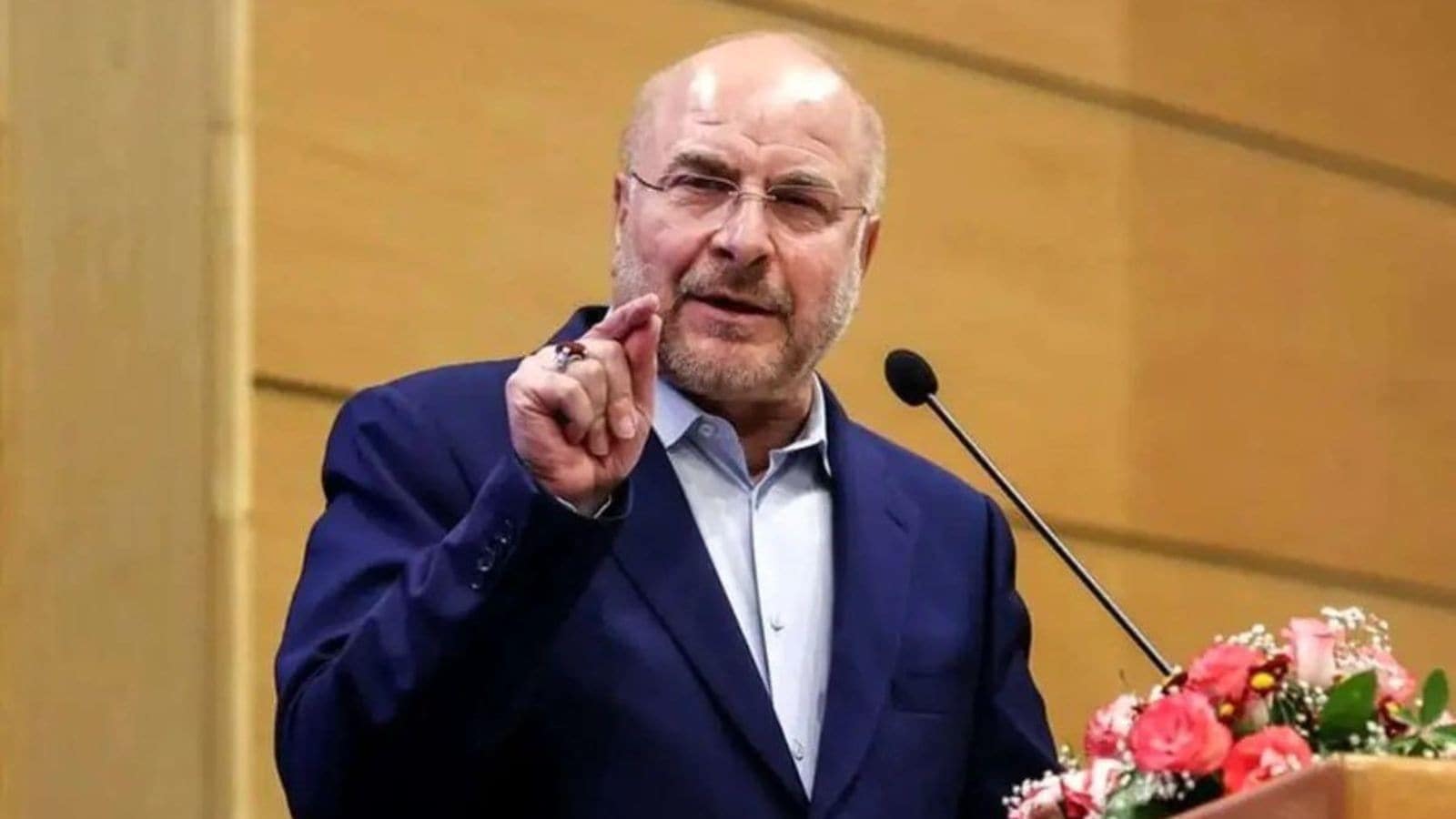
Mohammad Baqer Qalibaf, the Speaker of the Iranian Parliament, did not arrive in Pakistan to exchange pleasantries over tea. He came with a briefcase full of conditions and a gaze fixed firmly on the Mediterranean coast. While the official itinerary spoke of bilateral cooperation and parliamentary ties, the real conversation was happening in the subtext. Iran has drawn a line in the shifting sands of the Middle East, and they are using the Pakistani stage to broadcast it to the world.
The Lebanon Prerequisite
For weeks, the global community has looked toward Washington and Islamabad, hoping for a breakthrough that might cool the boiling tensions in the Middle East. There was a flicker of hope that Pakistan, with its unique position as a bridge between the Sunni and Shia worlds, could act as the ultimate mediator. But Qalibaf stepped onto the podium and effectively blew out that candle.
The message was blunt. No meaningful progress can be made on the broader chessboard until the guns fall silent in Lebanon.
To understand why this matters, you have to look past the maps and the troop movements. Think of a family in a basement in South Beirut, listening to the whistle of incoming fire. For them, "diplomacy" is an abstract noun that hasn't saved their roof. For Qalibaf, that family is the primary leverage. By tethering any regional cooperation to a Lebanese ceasefire, Iran is signaling that its proxies are not just pawns to be sacrificed; they are the very foundation of its foreign policy.
This isn't a suggestion. It is a blockade. By insisting on a "Lebanon first" policy, Tehran is essentially holding the door to wider negotiations shut until its specific security requirements for Hezbollah are met. It places the United States in a vice. If the U.S. wants Pakistan to help stabilize the region or pull Iran back from the brink, they must first find a way to stop the bleeding in a country that has become the epicenter of a proxy war.
A Walk Through the Diplomatic Maze
The logistics of this meeting were a masterpiece of optics. Qalibaf met with Pakistan’s top brass, including the Prime Minister and the Speaker of the National Assembly. On the surface, the photos showed handshakes and forced smiles. Underneath, there was a profound sense of friction.
Pakistan finds itself in an impossible position. They share a long, porous, and often violent border with Iran. They need Iranian energy. They need a stable neighbor to the west while they deal with their own internal economic tremors and the perennial shadow of India to the east. Yet, Pakistan is also deeply entwined with Western financial institutions and security architectures.
Every time a Pakistani official nods in agreement with an Iranian counterpart, they are looking over their shoulder at Washington.
Consider the hypothetical case of a mid-level Pakistani diplomat named Tariq. Tariq spends his days balancing the books of national interest. He knows that if Pakistan leans too far toward Iran, the IMF might become suddenly less "flexible" with the next bailout. If he leans too far toward the West, the border with Iran might suddenly flare up with insurgent activity that the state cannot afford to suppress. Qalibaf’s visit forces men like Tariq to walk a tightrope made of razor wire.
The Invisible Stakes of the Islamabad Talks
We often talk about geopolitics as if it were a game of Risk, played on a flat board with wooden pieces. The reality is far more visceral.
The "conditions" Qalibaf laid down are not just bullet points on a memo. They are the echoes of a regional architecture that is rapidly deconstructing itself. By choosing Pakistan as the venue for this ultimatum, Iran is trying to pull Islamabad out of the neutral zone. They are asking Pakistan to take a side in the most dangerous conflict of the twenty-first century.
Why Pakistan? Because Pakistan is the only nuclear-armed Muslim nation. Its voice carries a weight that others do not. If Iran can convince, or coerce, Pakistan into echoing the "Lebanon first" sentiment, it creates a powerful bloc that the West cannot ignore. It turns a bilateral dispute into a collective demand from the heart of the Islamic world.
But this strategy has a high cost. It turns the host nation into a target. It invites scrutiny and pressure that Islamabad is ill-equipped to handle. The "invisible stakes" here are the sovereignty of middle powers caught in the crossfire of titans.
The American Shadow
While U.S. officials were not physically in the room during Qalibaf's statements, their presence was felt in every pause. The Iranian Speaker’s rhetoric was a direct response to the American-led efforts to normalize relations across the Middle East—a project that Iran views as an existential threat.
Qalibaf is essentially telling the U.S. that there is no shortcut to peace. You cannot bypass the "Resistance Axis" to find a solution in Islamabad. You cannot ignore the ruins of Nabatieh and expect a warm welcome in the gardens of the Faisal Mosque.
It is a sobering reality check. The U.S. has often tried to compartmentalize these conflicts, treating the war in Gaza, the skirmishes in Lebanon, and the nuclear tensions with Iran as separate files. Qalibaf has just stapled them all together. He has made it clear that for Iran, the Middle East is a single, interconnected nervous system. If you pinch one nerve in Beirut, the brain in Tehran will scream.
The Human Cost of the Stalemate
While the diplomats argue over the wording of joint communiqués, the people on the ground continue to pay the rent for these geopolitical ambitions.
The Iranian people, suffering under the weight of soul-crushing sanctions, see their leaders spending political capital on foreign conflicts. The Pakistani people, struggling with 30% inflation and a power grid that flickers like a dying candle, see their government being dragged into a drama they didn't script.
There is a profound exhaustion in the region. It is a fatigue that transcends borders. It is the weariness of a shopkeeper in Quetta who just wants the border to stay open so he can trade his goods. It is the despair of a student in Shiraz who sees his future being traded for a few miles of territory in a land he has never visited.
Qalibaf’s conditions might be strategically sound from a Persian perspective, but they offer no solace to the common man. They offer only more waiting. More tension. More uncertainty.
The Border of No Return
One of the most telling moments of the visit was the discussion surrounding the "security of the borders." To a casual observer, this sounds like standard counter-terrorism talk. To those who live near the Sistan-Baluchestan region, it is a coded warning.
The border between Iran and Pakistan is a wild, lawless frontier. It is the site of frequent kidnappings, drug smuggling, and sectarian violence. When Qalibaf talks about security conditions, he is reminding Islamabad that Iran has the power to either help stabilize that border or let it burn.
It is a subtle, yet devastating, form of leverage. He is saying, We can make your life very difficult if you do not help us carry this message to the Americans. It’s a classic move from the Tehran playbook: the integration of hard security threats with high-level diplomacy. It’s effective. It’s also terrifying for anyone who believes in a world governed by laws rather than threats.
The Fragility of the Paper Walls
Islamabad’s response has been carefully curated. They have expressed "solidarity" with the people of Lebanon—a safe, humanitarian stance—while avoiding a full endorsement of Qalibaf's hardline conditions.
But these are paper walls. They are thin, fragile, and easily shredded by the heat of a real crisis. Pakistan cannot remain a neutral observer forever. The gravity of the Iran-U.S. conflict is too strong; it pulls everything into its orbit.
The talks in Pakistan were supposed to be a bridge. Instead, they served as a pedestal for an ultimatum. Qalibaf didn't come to negotiate; he came to set the price of negotiation. And that price is a total recalibration of Western policy in Lebanon.
As the Iranian delegation's plane lifted off from Islamabad, it left behind a city more anxious than it found it. The humid air remained, but it was now poisoned by the realization that the path to peace has just become significantly steeper.
The world is waiting for the U.S. response. They are waiting to see if Washington will blink or if they will double down on their own set of conditions. In the meantime, the families in Beirut, the shopkeepers in Quetta, and the students in Shiraz continue to live in the shadow of a game they cannot win.
The grand narrative of the Middle East has always been one of shifting alliances and deep-seated grievances. But what happened in Islamabad this week feels different. It feels like the closing of a door. It feels like the moment a chess player stops thinking about the next move and simply knocks the pieces off the board.
The conditions have been set. The line has been drawn. Now, we wait to see who is brave enough to cross it, and who will be crushed in the attempt.