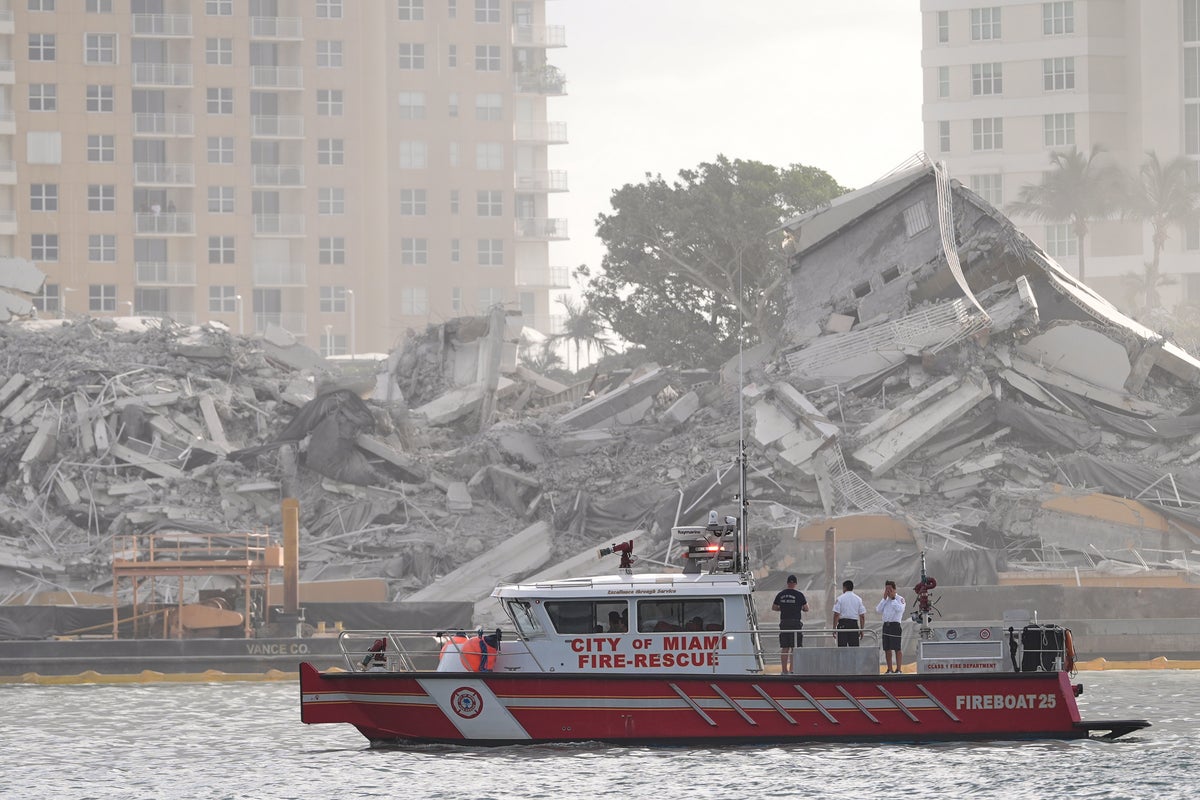
The controlled implosion of a high-rise structure, such as the former Mandarin Oriental, is not a singular event of destruction but a high-stakes execution of gravitational energy management. While spectators focus on the visual spectacle of a building vanishing in seconds, the operational reality involves a months-long process of weakening structural integrity to ensure that gravity—not explosives—performs the primary work. The objective is a vertical collapse that contains the debris within the building's footprint, a feat of engineering that requires a precise understanding of the Three Pillars of Induced Collapse: structural pre-weakening, ignition sequencing, and vibration mitigation.
The Physics of Controlled Gravitational Collapse
In a standard demolition, the structure’s load-bearing capacity is methodically reduced until the remaining supports can no longer withstand the downward force of the building's own mass. This is a deliberate transition from a state of static equilibrium to dynamic failure. Meanwhile, you can read related developments here: Poland and South Korea are Locked in a Strategic Trap of Necessity.
Load Path Disruption
The primary engineering challenge lies in the redistribution of loads. Every building is designed with a specific load path—the route through which weight is transferred from the roof to the foundation. Engineers must identify the critical "key" columns. By removing non-essential walls and flooring (the "softening" phase), they isolate these columns. The subsequent application of explosives does not "blow up" the building; it removes these final support points simultaneously or in a timed sequence, causing the upper floors to become a falling hammer that pulverizes the floors below.
The Kinetic Energy Function
The energy released during an implosion can be modeled by the relationship between the building’s mass and the height of the fall. The potential energy $PE = mgh$ (where $m$ is mass, $g$ is gravity, and $h$ is height) is converted into kinetic energy as the structure descends. In the case of a massive hotel structure, this energy is immense. If the collapse is not perfectly vertical, this energy shifts laterally, risking "ejection" where debris breaches the safety perimeter. To prevent this, charges are often detonated in a "V" or "center-out" pattern, pulling the outer walls inward toward the center of the building as it falls. To see the complete picture, check out the detailed analysis by The Guardian.
The Strategic Phases of Pre-Implosion Engineering
A successful implosion is won or lost in the months preceding the countdown. The process follows a rigid hierarchy of operations designed to minimize the quantity of explosives required and maximize the predictability of the fall.
Structural Pre-Weakening and Softening
Before a single ounce of dynamite is placed, the building undergoes a surgical strip-down. This is not merely for recycling materials like copper and steel; it is a structural necessity.
- Mass Reduction: Removing interior partitions, HVAC systems, and non-load-bearing masonry reduces the total weight that must be managed, while also removing "buffer" material that could unpredictably redirect falling debris.
- Shear Wall Notching: Reinforced concrete shear walls, designed to resist wind and seismic forces, are notched or partially demolished to ensure they offer zero resistance once the primary columns are severed.
- Steel Weakening: In steel-frame buildings, engineers use torches to cut "windows" into the webs of steel beams, leaving just enough material to support the dead load of the empty building while ensuring it will buckle instantly under the impact of the falling floors above.
Charge Placement and Delay Sequencing
The "implosion" effect is an illusion created by millisecond-delay detonators. If all explosives fired at once, the resulting air blast would shatter windows for blocks and potentially kick the building's base outward.
- The Sequential Drop: By timing the basement and lower-floor detonations to occur milliseconds before the upper floors, engineers create a vacuum of support.
- Non-Electric Initiation: Modern demolitions typically use non-electric (Nonel) or electronic detonators to prevent accidental triggering by radio frequencies or static electricity. Electronic detonators allow for precision down to a single millisecond, enabling the "wave" effect where one side of the building starts to fall slightly before the other, steering the structure into a specific "drop zone."
Environmental and Seismological Constraints
The demolition of an urban landmark involves managing externalities that are often more complex than the building itself. The proximity of neighboring structures, underground utilities, and transit lines creates a "Zero Tolerance" environment for error.
Vibration Control and Soil Dynamics
The impact of several thousand tons of concrete hitting the ground creates a localized seismic event.
- Geotechnical Assessment: Engineers must calculate how the vibration will travel through the specific soil type of the site. Bedrock conducts vibrations efficiently, potentially damaging distant basements, while sandy soils may dampen the shock but risk liquefaction or settlement.
- Seismic Berms: To mitigate this, "crush pads" made of dirt and debris are often piled on the ground floor. These act as shock absorbers, extending the duration of the impact and lowering the peak particle velocity (PPV) of the vibration.
Dust Suppression and Air Quality
The most significant post-event challenge is the dust cloud. A building's collapse atomizes drywall, mortar, and concrete.
- Mist Cannons and Hydration: Strategic placement of high-pressure water foggers creates a "curtain" intended to trap particulate matter.
- Atmospheric Monitoring: Success is measured by the speed at which the dust settles and the absence of hazardous materials in the air. This requires pre-implosion remediation where all asbestos and lead-based components are removed under strict containment.
The Economic and Risk Calculus of Implosion vs. Deconstruction
Choosing implosion over "top-down" manual deconstruction is a decision driven by the intersection of time-value of money and site risk.
- Time Compression: An implosion can shave six to twelve months off a redevelopment schedule. In high-value real estate markets, the interest savings on construction loans often outweigh the high insurance premiums associated with explosives.
- Safety Trade-offs: Manual demolition requires workers to spend thousands of man-hours on weakened floors at extreme heights. Implosion moves the risk to a single, highly controlled moment, though the magnitude of a potential failure is significantly higher.
- Urban Density Limitations: If the "throw distance" (the predicted radius of flying debris) overlaps with critical infrastructure like active power substations or hospitals, implosion is often discarded in favor of robotic hammering or diamond-wire sawing, regardless of the cost.
The Anatomy of the Failure Chain
When a demolition goes wrong, it is rarely due to an explosive malfunction. It is almost always a failure of structural analysis.
- The Bridge Effect: If the pre-weakening is insufficient, a section of the building may remain rigid, acting as a single unit and "toppling" like a tree rather than pancaking.
- Incomplete Initiation: If a primary delay line is severed by falling debris before it can trigger its assigned charges, a portion of the building may be left standing, precariously perched on a ruined base—the worst-case scenario for recovery teams.
- Over-Confinement: Using too much explosive in a reinforced column can cause the concrete to "shuck" off without crushing the internal rebar, leaving a "birdcage" of steel that still possesses significant load-bearing capacity.
The demolition of a structure of this scale serves as a terminal audit of its original construction. It reveals the hidden strengths and flaws of the 20th-century engineering that built it. As urban centers densify, the window for these operations narrows, requiring even higher levels of mathematical precision and acoustic management.
The strategic play for future urban redevelopment lies in the integration of 3D structural modeling with real-time vibration sensors. Developers must move away from viewing demolition as a "clearing" phase and instead treat it as a precision civil engineering project where the building itself is the primary tool of its own removal. The most efficient demolition is one where the gravitational potential energy of the structure is harvested so effectively that the explosives serve only as the catalyst for a self-correcting descent.