The word "overreaction" is the favorite shield of the comfortable. When former diplomats or armchair analysts look at the escalating exchange between Israel, the United States, and Iran, they reach for that word because it implies a lack of proportion. They suggest that if everyone just sat in a room and agreed to a measured, linear response, the world would stabilize.
They are wrong. In the brutal logic of Middle Eastern geopolitics, "proportionate" is just another word for "ineffective."
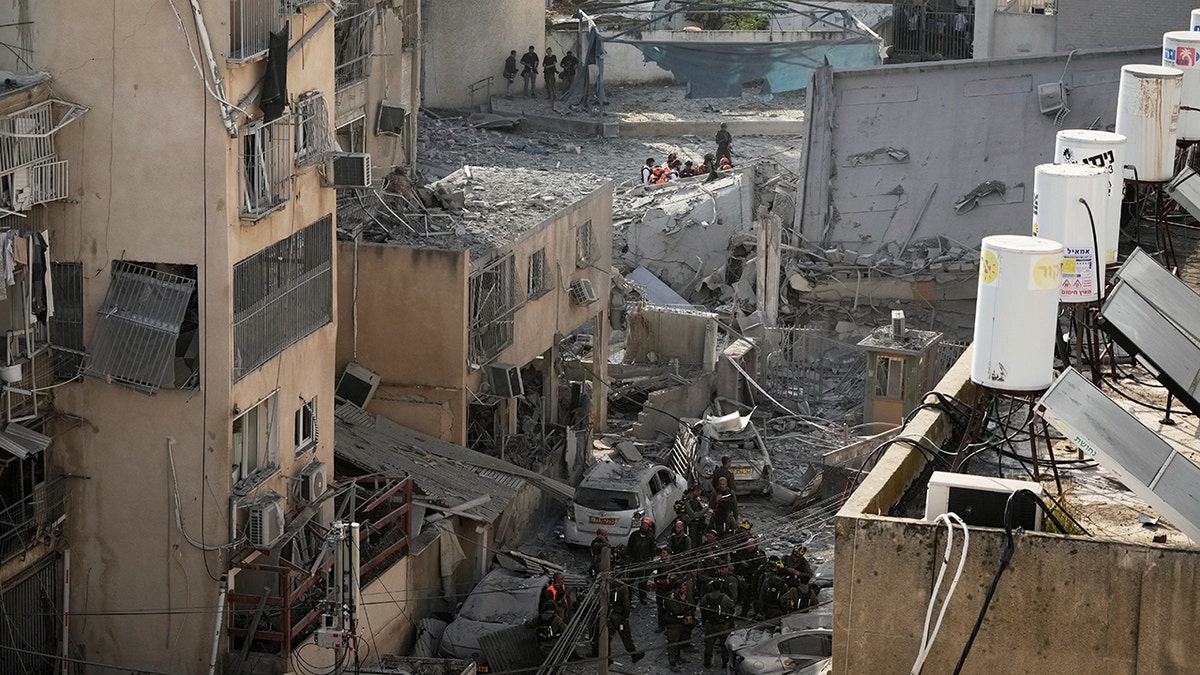
To call the recent strikes on Iranian military infrastructure an overreaction is to fundamentally misunderstand the nature of deterrence. Deterrence isn't a math problem. It isn't about trading one chess piece for another of equal value. Deterrence is a psychological game where the goal is to make the cost of the next move so unthinkable that the opponent loses the will to play.
If you respond to a drone strike with a drone strike, you haven't solved the problem. You've just set the price of doing business.
The Myth of the Measured Response
The "lazy consensus" among the diplomatic elite—including those who have spent decades in the corridors of power in New Delhi or Brussels—is that escalation is a ladder we must avoid climbing. They believe in the "tit-for-tat" model.
Here is why that model fails: It assumes both players have the same goal.
Iran's goal isn't stability. It is the steady, incremental expansion of influence through a network of proxies—the "Ring of Fire" strategy. They use Hezbollah, the Houthis, and various militias to bleed their enemies through a thousand cuts. If Israel and the US only respond "proportionately" to those cuts, they are participating in their own slow demise.
I have seen intelligence frameworks and policy papers that prioritize "de-escalation" above all else. What these papers ignore is that de-escalation is often interpreted by an aggressor as a green light. When you refuse to punch back harder than you were hit, you are telling the bully exactly how much it costs to hit you again.
Breaking the Proxy Loophole
The most dangerous misconception in modern warfare is that a nation-state can hide behind a proxy and avoid the consequences. For years, Iran has operated under a doctrine of "plausible deniability." They provide the GPS-guided munitions, the training, and the funding, but they expect their own soil to remain sacred.
The recent strikes dismantled that safety net.
By hitting targets inside Iranian territory, the US-Israel coalition isn't overreacting; they are correcting a decades-old market failure in international relations. They are internalizing the cost for Tehran.
Imagine a scenario where a corporation funds a group to sabotage its competitors' factories. If the law only allows the competitors to sue the vandals—who have no assets—the corporation will never stop. You have to go after the board of directors. That isn't an overreaction. It’s the only logical way to stop the cycle.
The Nuclear Calculus
We need to be brutally honest about what is at stake. This isn't just about regional skirmishes. This is about the "breakout time" to a nuclear weapon.
The critics who cry "overreaction" never seem to have an answer for the nuclear question. If Iran perceives the West as hesitant or paralyzed by the fear of escalation, they will finish the job. A nuclear-armed Iran changes the global security architecture forever. It triggers a Sunni-Shia nuclear arms race, with Saudi Arabia and Egypt likely following suit.
In this context, a massive conventional strike today is a humanitarian act compared to a nuclear exchange tomorrow.
$D = P \times V$
In the equation of deterrence, $D$ (Deterrence) equals $P$ (Perceived Power) multiplied by $V$ (Will to use it). If $V$ is zero, $D$ is zero, no matter how many carrier strike groups you have in the Med. The recent strikes were an attempt to restore the $V$ in that equation.
The Hidden Cost of "Stability"
There is a high price to pay for the contrarian stance of "Strategic Overreaction." It risks a wider regional war. It spikes oil prices. It tests the limits of international law.
But the alternative—the "Proportionate Response"—has a 100% failure rate in this theater.
Look at the last decade. Every time the West opted for "measured" pressure, the proxy network grew. Every time a "red line" was crossed with only a verbal condemnation, the centrifuge count went up.
The diplomats tell you that "there is no military solution." This is a platitude that ignores history. Military action doesn't always provide a permanent solution, but it creates the conditions where a diplomatic one becomes possible. You cannot negotiate with an entity that believes it is winning. You can only negotiate with one that is terrified of what happens if the talking stops.
The False Premise of the "Innocent Bystander"
A common argument from the "overreaction" camp is that these strikes destabilize the global economy and hurt developing nations. This is a classic rhetorical trap. It frames the defender as the cause of the instability rather than the reaction to it.
When the Houthis—backed by Iranian intelligence—shut down shipping in the Red Sea, they are the ones attacking the global economy. To suggest that a strike on the source of those weapons is the "overreaction" is a form of gaslighting.
We have to stop asking, "How do we keep things quiet for the next six months?" and start asking, "How do we ensure the next generation isn't living under the shadow of a nuclear-armed revolutionary state?"
Beyond the Diplomatic Echo Chamber
If you want to understand why these strikes are happening, stop listening to the people who benefit from the status quo. The "expert" class thrives on endless negotiations, summits, and "meaningful dialogues." They view a kinetic strike as a failure of their profession.
I prefer to look at the data of intent.
When an adversary tells you they want to wipe a country off the map, and they are actively building the tools to do it, believe them. When they use those tools to strike your allies, hit them back twice as hard.
This isn't about being a "hawk" or a "warmonger." It’s about being a realist. The Middle East respects strength because strength is the only currency that doesn't devalue overnight.
If the strikes were truly an overreaction, we would see a total regional collapse. Instead, we see a recalibration. We see players in the region suddenly looking for backchannels. We see a pause in the escalation cycle as the aggressor realizes the old rules no longer apply.
The "overreaction" was the only move left on the board.
Stop calling for a return to the "measured" policies that got us into this mess. The "lazy consensus" is a suicide pact dressed up in a suit and tie. If you want peace, you have to be willing to make the other side fear the alternative more than they desire their objectives.
The strikes weren't too much. They were long overdue.
Get comfortable with the friction. It's the sound of a failed status quo being dismantled.
Pick a side or get out of the way.