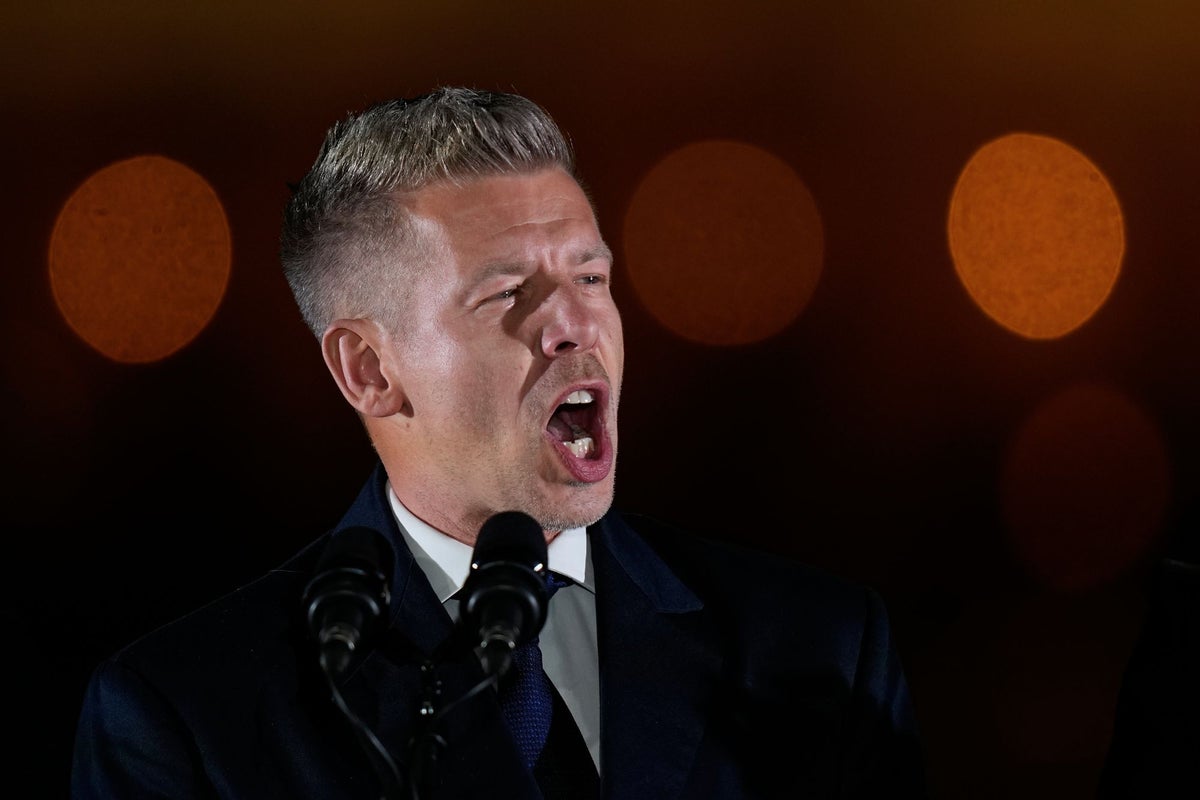
The international press is currently drunk on the narrative of a "democratic spring" in Budapest. You have seen the headlines. They scream about a landslide victory for Peter Magyar. They toast to the end of Viktor Orban’s sixteen-year "autocracy." They treat this election result like a sudden, miraculous fever break in the heart of Europe.
They are dead wrong.
What the mainstream media describes as a revolution is actually a hostile takeover by the same political DNA they claim to despise. The "lazy consensus" suggests that because Orban is out, liberal democracy has won. In reality, Hungary has not rejected "Orbanism"; it has simply traded the aging architect for a younger, more efficient project manager. If you think this is a return to the status quo of the early 2000s, you aren't paying attention to the mechanics of power in Central Europe.
The Magyar Paradox
Peter Magyar did not win by being the "Anti-Orban." He won by being the "Better Orban."
For years, the Hungarian opposition failed because they tried to fight a populist with a spreadsheet. They talked about institutional integrity, judicial independence, and European Union norms. The voters stayed home or voted for the Fidesz machine because the opposition felt like a lecture from a Brussels bureaucrat.
Magyar changed the game by utilizing the exact same playbook that kept Orban in power for nearly two decades. He leaned into nationalism. He spoke the language of grievance. He utilized a charismatic, singular leadership style that borders on a cult of personality.
Breaking Down the "Landslide"
When we look at the data, the "landslide" looks less like a shift in values and more like a consolidation of frustration.
- The Cannibalization of the Left: Magyar didn't just flip Fidesz voters; he devoured the existing opposition. The traditional left-wing and centrist parties have been reduced to rounding errors. This isn't a broad coalition; it’s a monolith replacing a monolith.
- The Turnout Trap: High turnout is often cited as proof of democratic engagement. In this case, it was a stress signal. Voters didn't show up because they fell in love with democratic theory; they showed up because the populist rhetoric reached a boiling point.
- The State within a State: Orban spent sixteen years rewiring the Hungarian state. He placed loyalists in the courts, the media, the universities, and the energy sector. A "landslide" at the ballot box does not instantly dissolve sixteen years of structural capture.
Why the Trump Ally Narrative Misses the Mark
The obsession with Orban’s relationship with Donald Trump is a distraction for Western audiences. It’s a convenient hook for American editors, but it ignores the local reality. Orban’s power wasn't a gift from Mar-a-Lago; it was built on a sophisticated system of patronage and "illiberal" economic theory.
Critics focus on the optics of the Orban-Trump bromance while ignoring the NER (Nemzeti Együttműködés Rendszere), or the System of National Cooperation. This is the web of oligarchs and state-funded contracts that keeps the gears turning. Peter Magyar, an insider who grew up within this very system, knows where the bodies are buried because he helped dig the graves.
The media calls him a whistleblower. I call him a dissident of the inner circle. There is a massive difference. A whistleblower wants to destroy the system; a dissident wants to lead it.
The Illusion of a European Pivot
The most dangerous misconception circulating right now is that Hungary will now become a "team player" in the EU.
Expectations are high that Budapest will suddenly align with Paris and Berlin on everything from migration to Ukraine. This is a fantasy. Magyar’s base is just as skeptical of "Brussels overreach" as Orban’s was. He has spent months distancing himself from the federalist impulses of the EU.
If he tries to pivot too hard toward a pro-EU stance, his "landslide" coalition will evaporate. He is trapped by the same nationalist gravity that Orban navigated.
The Cost of Disruption
I have seen political analysts celebrate "disruptors" before. I saw it in 2011 with the Arab Spring and in 2018 with the populist surges in Italy. In every instance, the "people’s champion" eventually faces the reality of the bureaucracy.
Imagine a scenario where Magyar attempts to purge the Fidesz-appointed judges. He will be accused of the exact same power grab he used to oust Orban. If he leaves them in place, he can’t govern. This is the "Capture Trap." You either become the autocrat to defeat the autocrat, or you remain a lame duck while the deep state ignores you.
Dismantling the "People Also Ask" Falsehoods
The public is asking the wrong questions. They want to know "Is Hungary safe for democracy?"
The honest, brutal answer: Democracy was never the primary concern for the Hungarian voter. Stability was. Predictability was. A sense of national pride was.
The question isn't whether democracy is back. The question is whether Magyar can provide a better version of "Illiberalism" that doesn't trigger EU sanctions. He isn't looking to restore the 1990s; he is looking to optimize the 2020s.
- "Will Orban stage a comeback?" He doesn't need to. His ideas have already won. His protégés and his rivals now speak his language. Even in defeat, Orban’s framework defines the boundaries of Hungarian politics.
- "Is this the end of populism in Europe?" Quite the opposite. This is the evolution of populism. It is proof that the only way to beat a populist is to produce a more telegenic, more aggressive populist.
The Battle Scars of Political Realism
I have watched movements like this rise and fall across the Visegrád Group. We saw it with Matovič in Slovakia. A "man of the people" rises on an anti-corruption platform, sweeps the elections, and then realizes that shouting in a town square is very different from managing a coalition and a captured civil service.
The messiness of the next eighteen months will be a cold shower for the international press. They will find that Magyar is not the liberal savior they painted in their Sunday long-reads. He will be difficult. He will be stubborn. He will put "Hungary First" in ways that will make the European Commission wince.
The Hard Truth About the "New" Hungary
The victory of Peter Magyar is a victory of style over substance. It is a victory of a new generation of the elite over the old guard.
If you are looking for a return to a textbook liberal democracy, you are looking at the wrong country. Hungary has spent nearly two decades being told that the West is in decline and that a strong, centralized, nationalistic state is the only way to survive. You don't undo that brain-trust with one election cycle.
The media’s "landslide" narrative is a comforting lie. It suggests that the Orban era was a glitch in the system. It wasn't. It was a feature.
Magyar hasn't deleted the program; he’s just updated the software. The interface looks cleaner, the icons are modern, and the marketing is brilliant. But underneath it all, the code remains the same.
Stop waiting for the "spring." Prepare for a very long, very complicated autumn.
The king is dead. Long live the king.