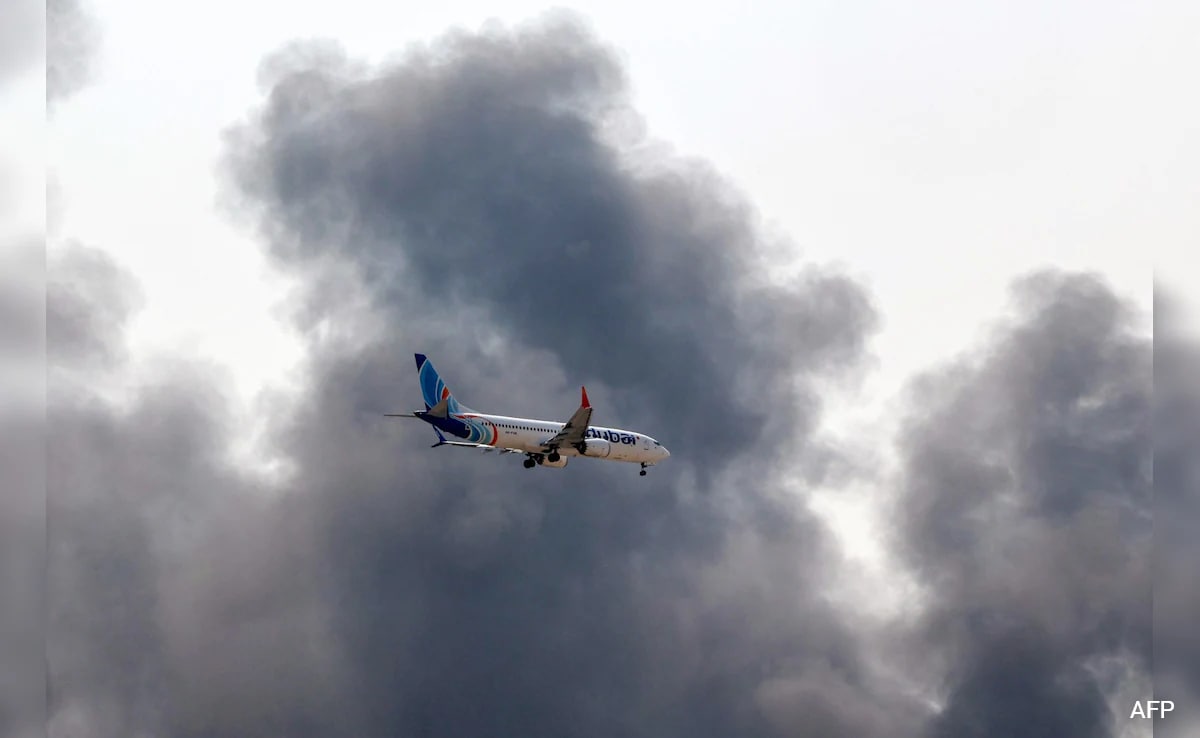
The restriction of foreign flight slots at Dubai International Airport (DXB) through May represents a hard cap on the supply-side scalability of the India-UAE aviation corridor. This is not a mere scheduling inconvenience; it is a forced reallocation of market share and a stress test for the unit economics of Indian Low-Cost Carriers (LCCs) and Full-Service Carriers (FSCs) alike. When a primary global hub enforces slot constraints, the resulting bottleneck creates a cascade of yield management challenges, aircraft utilization inefficiencies, and bilateral treaty friction.
The Mechanics of Slot Scarcity
Aviation operations at high-density airports function within a rigid framework of Coordinated Airport Slots. Each slot—a permission to land or take off at a specific time—is a finite resource. When Dubai limits foreign flight movements, it effectively lowers the "Capacity Clearing Price" of the airport's infrastructure.
For Indian carriers, the impact follows a specific hierarchy of operational disruption:
- Utilization Degradation: An aircraft is a depreciating asset that only generates revenue while airborne. If a carrier loses three weekly frequencies to Dubai, that airframe must be re-routed to a secondary, often lower-yield domestic or regional route. This lowers the Block Hour Utilization rate, increasing the fixed cost per Available Seat Kilometer (ASK).
- Network Connectivity Breakdown: Dubai serves as a primary "sixth freedom" hub. Indian passengers use DXB as a transit point for North American and European destinations. Truncating the feeder flights from Indian metros breaks the spoke-to-hub synchronization, forcing passengers toward competing hubs like Doha (DOH) or Abu Dhabi (AUH).
- Yield Inversion: Supply contraction in the face of inelastic demand—driven by the massive Indian diaspora and trade links—results in spiked spot fares. While this might suggest higher margins on remaining flights, the loss of total volume and the overhead of managing re-accommodated passengers often neutralize the revenue gain.
Dissecting the Indian Carrier Vulnerability Matrix
The exposure of Indian airlines to Dubai’s operational limits is not uniform. It varies based on the underlying business model and the reliance on point-to-point versus hub-and-spoke traffic.
The LCC Operational Trap
Low-Cost Carriers like IndiGo and Air India Express operate on high-frequency, thin-margin rotations. Their profitability depends on "turning" aircraft quickly. When slot constraints are imposed, these carriers lose the ability to dominate time-sensitive "morning out, evening back" business blocks. The inability to offer a consistent daily schedule erodes their value proposition for corporate travelers, pushing them toward Gulf-based competitors who often maintain higher slot priority due to "grandfather rights" or bilateral protections.
The FSC Strategic Pivot
For Full-Service Carriers like Air India and Vesta, the Dubai constraint is an opportunity to test the resilience of their direct-to-destination long-haul strategy. If Dubai limits frequencies, these carriers can attempt to bypass the hub by pushing passengers toward direct flights to London, New York, or Paris. However, this requires a fleet of wide-body aircraft (Boeing 777s or 787s) which are currently in short supply across the Indian market.
The Bilateral Imbalance and Regulatory Friction
International aviation is governed by Air Service Agreements (ASAs), which dictate the number of seats or frequencies allowed between two nations. The current friction in Dubai highlights a long-standing tension: Gulf carriers frequently exhaust their seat quotas to India and lobby for more, while Indian carriers often struggle to utilize their full allocation due to infrastructure bottlenecks at their own home bases or, in this case, at the destination hub.
When Dubai limits foreign flights, it creates a "de facto" protectionist environment. Even if the stated reason is runway maintenance or airspace congestion, the outcome is that the home-base carrier (Emirates or FlyDubai) retains a higher percentage of the total remaining capacity. This creates a systemic disadvantage for Indian operators who cannot easily shift their operations to Al Maktoum International (DWC) without sacrificing the connectivity benefits of the primary DXB hub.
The Cost Function of Rerouting
The immediate tactical response to a slot limit is to reroute capacity to secondary airports. However, the economics of flying into Sharjah (SHJ) or Ras Al Khaimah (RAK) as an alternative to Dubai are fraught with hidden costs:
- Intermodal Friction: Passengers destined for downtown Dubai face longer ground transit times from secondary airports. This allows airlines to charge a premium for the remaining DXB slots, but it simultaneously devalues the ticket price for the rerouted flights.
- Fuel Burn and Holding Patterns: Constraints at a major hub often lead to increased Air Traffic Control (ATC) flow management measures. Aircraft are frequently held in "stacks," burning expensive Jet A-1 fuel while waiting for a landing window. For Indian carriers already grappling with high taxation on Aviation Turbine Fuel (ATF), these minutes spent idling are direct hits to the bottom line.
- Crew Duty Limitations: Flight Duty Period (FDP) regulations are non-negotiable. If a flight is delayed or rerouted due to Dubai’s capacity limits, the crew may "time out," requiring a fresh crew to be positioned—a logistical nightmare and a massive unbudgeted expense.
Strategic Reconfiguration of the India-UAE Corridor
The limitation of flights until May forces a temporary but necessary shift in how Indian aviation strategy is formulated. To mitigate the impact of such "externalities," carriers must move beyond a "Dubai-centric" Gulf strategy.
The first priority is Asset Redeployment Efficiency. Instead of maintaining underutilized crews for Dubai routes, carriers should accelerate the launch of routes to underserved markets in Southeast Asia or Eastern Europe. This diversifies the geographic risk.
The second priority is Lobbying for Reciprocity. The Indian Ministry of Civil Aviation must use these operational constraints as leverage in future ASA negotiations. If Indian carriers are limited by infrastructure at DXB, there is a strong case for limiting further expansion of Gulf carriers into Tier-II Indian cities until parity is restored.
The third priority involves Revenue Integrity Management. Carriers must utilize predictive analytics to identify high-value passengers on restricted routes and offer "protected" status, ensuring that if a flight is canceled or moved, the customer lifetime value is preserved through priority rebooking on partner airlines, even at a short-term loss.
The ceiling in Dubai is a reminder that in the global aviation market, infrastructure is destiny. Indian carriers that rely on a single hub for their international throughput are fundamentally fragile. The shift toward wide-body orders and direct long-haul flying is the only long-term hedge against the operational whims of foreign hub coordinators. Every grounded flight in Dubai serves as a data point supporting the urgent expansion of India’s own international hubs in Delhi and Mumbai.