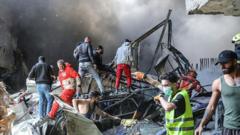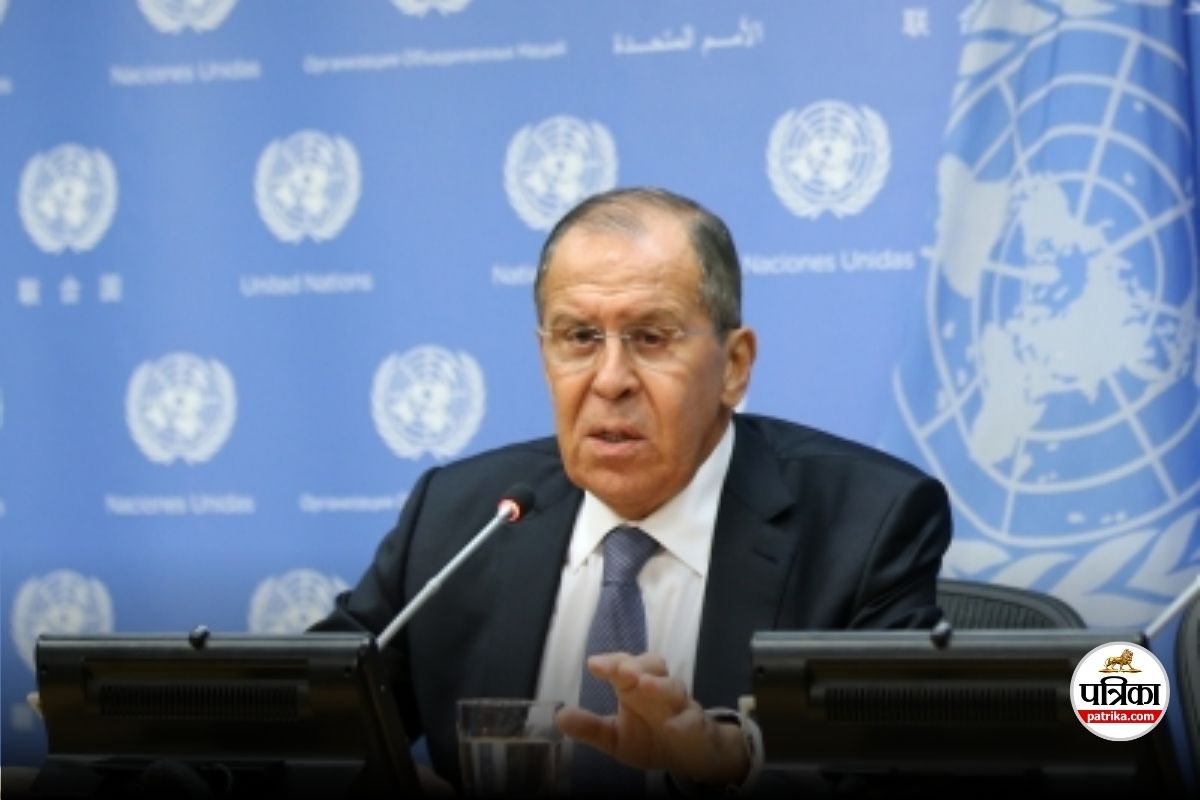
The Kremlin has officially entered the fray regarding the escalating violence between Israel and Hezbollah, issuing a stark warning that continued military operations in Lebanon are pushing the region toward a point of no return. Russia argues that these strikes are not merely tactical maneuvers but are actively derailing the fragile architecture of international negotiations. By targeting Lebanese infrastructure and high-ranking officials, Israel has triggered a diplomatic vacuum that Moscow believes could lead to a total collapse of regional stability.
This intervention from the Russian Foreign Ministry marks a significant shift in the geopolitical narrative. While Western powers have largely focused on Israel's right to self-defense following months of cross-border fire, Moscow is framing the situation as a systematic dismantling of the "Blue Line" sovereignty. The Russian stance is clear: every missile that lands in Beirut or southern Lebanon erases a page of the diplomatic playbook that has kept a full-scale regional war at bay for nearly two decades.
The Geopolitical Cost of Kinetic Diplomacy
Russia’s primary concern centers on the "derailing" of talks. For months, international mediators—including US and French envoys—have been working behind the scenes to decouple the Lebanese front from the ongoing conflict in Gaza. The goal was simple: convince Hezbollah to pull back from the border in exchange for border demarcations that favor Lebanese sovereignty.
However, the intensity of recent Israeli strikes has changed the calculus. When a state utilizes overwhelming force to achieve security objectives, the opposing side often finds it politically impossible to remain at the negotiating table. Moscow views this as a strategic blunder. From the Kremlin’s perspective, you cannot bomb a partner into a peace treaty. The current trajectory suggests that the more Israel pushes into Lebanon, the more Hezbollah feels compelled to double down, creating a cycle of escalation that bypasses the United Nations Security Council entirely.
The Russian Foreign Ministry’s statement specifically highlighted the risk of "uncontrolled escalation." This is not just diplomatic fluff. It refers to the very real possibility of Iranian intervention or the complete collapse of the Lebanese state, which is already reeling from an unprecedented economic crisis.
Moscow’s Hidden Stakes in the Levant
To understand why Russia is suddenly so vocal, one must look at the map of Syria. Russia maintains a significant military presence in Syria, including the Hmeimim Air Base and the naval facility at Tartus. A full-scale war in Lebanon would inevitably spill over the border into Syrian territory, where Israeli jets already frequently strike Iranian-linked targets.
Russia has spent years balancing its relationship with Israel and its alliance with Iran. This "deconfliction" has allowed Russia to maintain its influence in the Middle East without getting dragged into a direct confrontation. A massive Israeli campaign in Lebanon threatens this balance. If Lebanon becomes a scorched-earth battlefield, the instability will leak into Syria, forcing Russia to choose between defending its Syrian assets or allowing Israeli and Iranian forces to turn the Levant into a free-fire zone.
Furthermore, Russia is positioning itself as the "rational actor" in a room full of radicals. By calling for a return to diplomacy, Moscow is signaling to the Global South and Arab nations that while the United States provides the munitions for the conflict, Russia is the one advocating for the international legal order. It is a play for soft power at a time when Western influence in the Middle East is being tested by the civilian toll of the war.
The Myth of Surgical Precision
The Israeli military often speaks of "surgical strikes" aimed at Hezbollah’s leadership and rocket caches. While the intelligence behind these operations is undeniably sophisticated, the political fallout is anything but precise. Every strike on Lebanese soil is viewed by the local population—not just Hezbollah supporters—as an assault on national dignity.
This sentiment is exactly what Russia is tapping into. When a nation’s capital is buzzed by fighter jets and its telecommunications are hacked to send mass evacuation orders, the space for "moderate" voices vanishes. Russia understands that in the Middle East, perceptions of humiliation often drive policy more than military logic does. By highlighting the potential for talks to go "off the rails," Moscow is pointing out that Israel might be winning the tactical battle while losing the long-term strategic war for regional acceptance.
A Diplomatic Dead End
The United Nations Interim Force in Lebanon (UNIFIL) is currently standing on a fault line that is rapidly opening up. Russia has long been a proponent of UN Resolution 1701, which ended the 2006 war and called for the area south of the Litani River to be free of any armed personnel other than the Lebanese army and UN peacekeepers.
The reality on the ground is that 1701 has been a dead letter for years. Hezbollah never truly left the border, and Israel never stopped its overflights. Moscow’s recent statements suggest that the time for "managing" the conflict is over. We are entering a phase of "solving" it through force, and history in this region shows that military solutions rarely result in lasting peace.
Russia is essentially warning that if the international community—specifically the United States—does not reel in the Israeli offensive, the diplomatic channels will be replaced by a permanent state of high-intensity attrition. This would not only devastate Lebanon but would create a permanent security drain on Israel, regardless of how many commanders they eliminate.
The Iranian Factor and the Red Line
We must also consider the shadow of Tehran. Russia and Iran have moved closer in recent years, particularly in the defense sector. While Russia does not want a regional war, it cannot afford to see its primary regional partner, Iran, completely neutralized or pushed into a corner where it feels the only option is a direct strike on Israel.
Moscow’s rhetoric serves as a pressure valve. By publicly condemning the strikes, they are providing Iran and Hezbollah with a diplomatic narrative that doesn't require immediate military retaliation to "save face." It is a way of saying, "The world sees you as the victim of aggression," which can sometimes delay the need for a kinetic response.
However, this tactic has a shelf life. If the strikes continue to move north or if a ground incursion begins, no amount of Russian diplomatic maneuvering will prevent the conflict from expanding. The "rails" Moscow speaks of are already rusted and bent; a few more heavy blows might snap them entirely.
The Failure of Global Oversight
What we are witnessing is the erosion of the post-WWII security architecture in real-time. The fact that Russia—a country currently involved in its own massive conflict—is the one calling for restraint and "adherence to international law" highlights the absurdity of the current global state of affairs. It reveals a world where "international law" is a tool used by all sides to justify their actions or condemn their enemies, but rarely to actually prevent bloodshed.
The Israeli perspective remains that diplomacy has failed for eighteen years, and only force can secure their northern border so that 60,000 displaced citizens can return home. Russia’s counter-argument is that this force will only create a new generation of insurgents and a more volatile border for the next fifty years. Neither side is entirely wrong, which is precisely why the situation is so dangerous.
The leverage required to stop this slide is immense. It would require the US to halt arms shipments and Russia to exert actual pressure on Iran and Hezbollah. Neither seems likely in the current political climate. Instead, we see a series of performative statements while the munitions continue to fall.
Tactical Success vs. Strategic Catastrophe
The immediate future looks grim for those hoping for a ceasefire. Israel’s military establishment believes it has "momentum." They have successfully decapitated portions of Hezbollah’s middle management and destroyed significant portions of their short-range missile capability. In the cold logic of war, they see no reason to stop.
But Russia’s warning serves as a reminder of the "day after." If Israel succeeds in "breaking" Hezbollah, who fills the vacuum? A collapsed Lebanon is a breeding ground for even more radical elements, and a direct Iranian presence on the Mediterranean becomes more likely, not less. Moscow is looking at the long-game, where a fractured Lebanon becomes a permanent ulcer on the face of the Middle East, drawing in regional powers and ensuring that no energy projects, trade routes, or stability can ever take root.
The warnings from Moscow should be viewed not just as support for an ally, but as a pragmatic assessment of a region that is running out of exits. The "negotiating tracks" are not just stalled; they are being buried under the rubble of Beirut’s suburbs. If the strikes do not cease, the conversation will shift from "how to achieve peace" to "how to survive the coming conflagration."
The window for a negotiated settlement is closing, and once it shuts, the cost of reopening it will be measured in decades, not years.