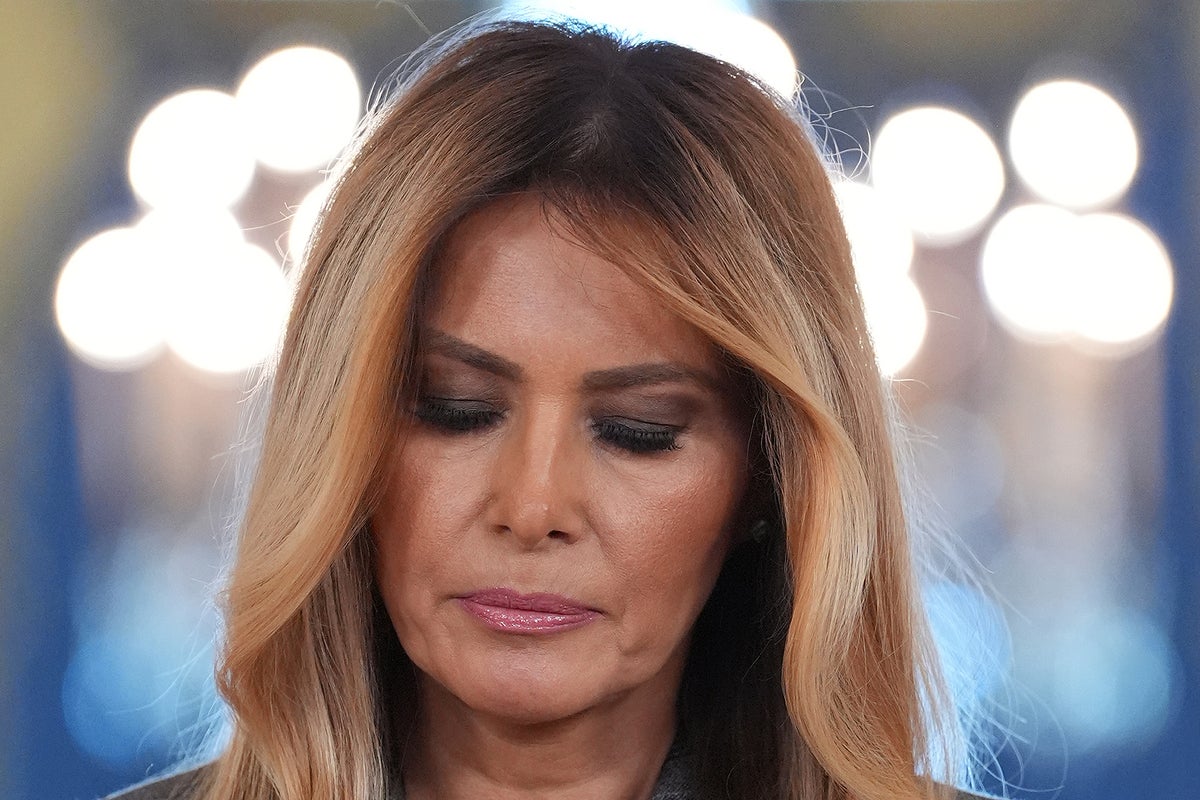
The Grand Foyer of the White House is usually reserved for the high ceremony of state, not the desperate clearing of a name. Yet, there stood Melania Trump on April 9, 2026, breaking a year of calculated silence to deliver a five-minute broadside that did more than just deny her involvement with Jeffrey Epstein. By calling for public congressional hearings where survivors can testify under oath, she didn't just break from her husband’s scripted "hoax" narrative; she effectively handed a loaded weapon to his most vocal internal critics.
This isn't just a wife defending her honor. It is a tectonic shift in the politics of the Epstein files, a saga that has already claimed the career of Marjorie Taylor Greene and seen the firing of Attorney General Pam Bondi just days ago. While the West Wing attempts to bury the ghost of the Little St. James island under the weight of the ongoing Iran conflict, the First Lady just invited it back into the parlor.
The Email That Ended the Silence
For months, the Trump administration operated under a precarious truce regarding the millions of pages of documents released under the Epstein Files Transparency Act. The strategy was simple: release enough to satisfy the legal letter of the law, but redact enough to protect "politically exposed persons."
That truce shattered in January 2026. Among a massive dump of three million documents was a 2002 email from Melania to Ghislaine Maxwell. In it, the future First Lady referred to Maxwell as "G" and complimented a magazine spread. While Melania’s team dismissed it as "casual correspondence" from a New York socialite’s past, the optics were disastrous. It gave oxygen to a fire the President had spent his entire second term trying to extinguish.
The President’s reaction to the Epstein scrutiny has been erratic. In 2024, he promised on the campaign trail to "roll out the black book." Once back in the Oval Office, the rhetoric shifted. He began calling the obsession with the files a "Democrat hoax," a pivot that led to his scorched-earth fallout with Marjorie Taylor Greene.
The MTG Exile and the Internal War
Before she was ousted, Greene was the loudest voice in the room demanding total transparency. Her signatures on discharge petitions and her public badgering of the Justice Department didn't just annoy the White House; they were seen as an unforgivable betrayal. When the President branded her a "traitor" in late 2025, it wasn't about the country. It was about personal loyalty.
Greene’s fall from grace served as a warning to the MAGA base: the Epstein files were a third rail. But Melania Trump is not a backbench congresswoman from Georgia. She cannot be purged or branded a traitor without collapsing the facade of the First Family.
By siding with the demand for public hearings—the very thing Greene was excommunicated for—Melania has created a protected space for dissenters. If the First Lady says the survivors deserve to be heard in the halls of Congress, how can the House Oversight Committee continue to slow-walk subpoenas?
The Pam Bondi Erasure
The timing of Melania’s statement is almost as aggressive as the content. Only a week prior, Donald Trump fired Attorney General Pam Bondi. Officially, the administration cited the need for "new leadership" during the Iran crisis. Unofficially, Bondi had become the face of the redaction scandal.
Bondi had been tasked with a near-impossible mission: manage the Epstein Library, a digital repository of the financier's life, while keeping the most damaging names behind black ink. The House Oversight Committee, led by James Comer and Robert Garcia, had already subpoenaed Bondi to explain why "politically exposed persons" were being shielded in violation of the 2025 Act.
With Bondi gone and Melania speaking out, the wall of protection around the "client list" is thinning. The First Lady’s demand for survivors to testify under oath suggests she believes the paper trail—redacted as it is—isn't the final word. She is calling for human testimony, the one thing that cannot be easily blacked out by a DOJ lawyer.
Why This Matters to the Midterms
The Republican Party is currently facing a "woman voting problem," a fact Greene pointed out shortly before her exit. The Epstein scandal has become a proxy for a much larger argument about power and accountability.
To a segment of the electorate, the administration’s hesitation to fully unmask Epstein’s associates looks like the very "swamp" politics the President promised to drain. By positioning herself as a champion for the survivors, Melania is attempting to reclaim the moral high ground for the Trump brand.
But this move carries immense risk. Public hearings are unpredictable. Survivors like Maria and Annie Farmer have already signaled they want "accountability, transparency and justice." If they are given a microphone in a congressional hearing, the narrative will no longer be under the control of the White House communications team.
The Silent Witness in the West Wing
Donald Trump’s own ties to Epstein—the shared social circles in Palm Beach and the 1990s social proximity—have been litigated in the press for decades. He has long maintained their friendship ended in the mid-2000s and that he knew nothing of the crimes.
However, the First Lady’s statement that "the lies... need to end today" indicates a level of personal frustration that has reached a breaking point. She is no longer willing to be a passive character in a scandal that involves her husband’s former associates.
The strategy appears to be a total decoupling. By inviting the survivors to speak, she is betting that the truth—whatever it is—will be less damaging than the radioactive cloud of "what ifs" currently hanging over her reputation. It is a high-stakes gamble that forces Congress to choose between the President’s desire for closure and the First Lady’s demand for exposure.
The Congressional Trap
Congress is now in a bind. Rep. Robert Garcia, the top Democrat on the Oversight Committee, immediately seized on Melania’s remarks, calling them a green light for the hearings the GOP leadership has resisted.
If Chairman James Comer refuses to hold the hearings, he is now publicly defying the First Lady. If he holds them, he risks a televised circus that could implicate figures across the political and business spectrum, many of whom are donors or allies.
The Epstein files were never just about one man. They were about a system of protection that spanned decades. Melania Trump just walked into the center of that system and pulled the lever.
The "Melania Maneuver" has effectively ended the era of controlled releases. You can redact a document, but you cannot redact a witness standing at a congressional podium. The question is no longer if the full truth will come out, but who will be left standing when it does.
Congress now has no choice but to side with the survivors, or admit that some secrets are too big to tell.