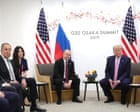
The room in Budapest is quiet, save for the rhythmic clicking of keyboards and the low hum of air conditioning. Outside, the Danube flows thick and grey, a silent witness to a thousand years of shifting empires and broken promises. Inside, a group of international observers stares at a screen, watching the digital pulse of a democracy. Their task is simple on paper: ensure the election is fair. But fairness is a slippery concept when the person tasked with monitoring the integrity of the vote spent years standing inches away from Vladimir Putin, translating his most private thoughts into the ears of world leaders.
His name is Aleksandr Udaltsov. To a casual observer, he is a seasoned diplomat, a man of meticulous detail and quiet efficiency. But in the high-stakes theater of European geopolitics, he is a shadow. For years, Udaltsov was the bridge between the Kremlin and the West. He was the one who smoothed the rough edges of Putin’s rhetoric during high-level summits, the man who understood the cadence of power better than almost anyone in the room. Now, he finds himself in Hungary, leading a mission to oversee an election that many fear is already tilted toward the Kremlin’s preferred outcome.
It is a situation that feels less like a modern political procedure and more like a Cold War thriller.
The Invisible Architect of Perception
To understand why this matters, you have to look past the ballot boxes and the tallies. Democracy isn't just about who casts the most votes; it’s about the collective belief that those votes actually count. When that belief is eroded, the foundation of a nation begins to crack.
Imagine a local carpenter named András. He lives in a small town three hours from the glittering lights of Budapest. András isn't a political theorist. He cares about the price of timber, the quality of the local school, and whether his pension will cover the rising cost of heating oil. When he walks into his local polling station, he expects a neutral process. He expects that the people watching the boxes are there to protect his voice.
Now, consider the psychological weight of knowing that the lead monitor—the man responsible for reporting irregularities to the international community—was the personal interpreter for a leader who has spent decades refining the art of "managed democracy." It changes the air in the room. It introduces a sliver of doubt that, once planted, is nearly impossible to weed out.
The role of an election observer is rooted in the concept of "radical neutrality." They are supposed to be the ghosts in the machine—present, but entirely without influence. They are the eyes of the world. However, when the eyes belong to someone with deep, historical ties to a regime that views independent elections as a nuisance to be managed, the "observation" begins to look more like "supervision."
The Art of the Subtle Tilt
The concern in Hungary isn't necessarily about a sudden, blatant theft of a million ballots in the middle of the night. That’s too messy. Modern authoritarianism is far more sophisticated. It’s about the "subtle tilt." It’s about creating a series of small, defensible obstacles that, when added together, make it nearly impossible for an opposition to gain traction.
It’s the state-controlled media that ignores opposition candidates. It’s the gerrymandering of districts that ensures a minority of voters can hold a majority of seats. And it’s the appointment of monitors who are predisposed to see "stability" where others see suppression.
Udaltsov’s presence is the ultimate symbol of this tilt. Critics argue that his appointment isn't an accident; it’s a message. It signals to the Hungarian electorate—and to the rest of the European Union—that the traditional rules of transparency are being rewritten.
Think of a football match where the referee is the brother of the home team’s star striker. Even if the referee calls every foul correctly, the game is tainted. Every whistle is scrutinized. Every close call is seen as a betrayal. The fans in the stands—the voters like András—stop looking at the players and start looking at the man with the whistle. They stop believing in the game.
The Digital Ghost in the Ballot Box
Beyond the physical presence of monitors, there is the terrifyingly opaque world of electronic voting and data management. In 2026, the battle for an election is fought in the servers as much as the streets. This is where the expertise of a man like Udaltsov becomes truly potent.
In the modern era, election monitoring requires a deep understanding of how data flows. It requires an audit of the software that tallies the votes and the algorithms that verify voter identities. When the head of a monitoring mission has spent a career navigating the highest levels of a state known for its prowess in cyber-influence and "active measures," the technical oversight becomes a question of trust.
Can we trust a man who was once the voice of the Kremlin to accurately report a digital glitch that happens to favor the pro-Kremlin incumbent? Or will that glitch be dismissed as a minor technical hiccup, a footnote in a report that ultimately concludes the process was "sufficiently transparent"?
The stakes are higher than the borders of Hungary. This is a stress test for the entire European experiment. If a member of the EU can successfully outsource its election integrity to figures with deep ties to external autocracies, then the very concept of a "European standard" for democracy becomes a hollow phrase. It becomes a costume that leaders wear while they dismantle the institutions from within.
The Weight of a Single Vote
In the end, the story isn't about Udaltsov, or even Viktor Orbán. It’s about the fragility of the social contract.
I remember talking to an elderly woman in a cafe near the Hungarian Parliament. She had lived through the 1956 uprising, and she spoke about the feeling of the tanks rolling into the city. For her, democracy wasn't a policy paper or a set of technical guidelines. It was the feeling of being able to speak her mind without looking over her shoulder.
"When you lose the truth," she told me, her voice barely a whisper, "you lose everything. You don't even know what you've lost until it's gone."
That is the hidden cost of having an ex-Putin interpreter at the helm of an election mission. It’s not just about the potential for fraud. It’s about the loss of the truth. It’s the creeping sensation that the world is being watched by people who have already decided what the final report will say.
We often talk about democracy as a sturdy oak tree, something that has survived for centuries and will continue to stand. But it’s more like a delicate ecosystem of trust. It requires constant tending. It requires the absolute certainty that the people in charge of the scales aren't leaning on them.
When that certainty vanishes, the people don't always rebel. Sometimes, they just go quiet. They stop showing up. They stop believing that their voice—the voice of the carpenter, the teacher, the nurse—matters. They retreat into their private lives, leaving the public square to the shadows and the whisperers.
The Danube continues its long journey, indifferent to the men in suits and the frantic reports being typed in guarded rooms. But for those living on its banks, the air feels heavier today. The shadow of the interpreter is long, stretching from the halls of the Kremlin to the small polling stations of the Hungarian countryside, reminding everyone that in the game of power, the most important words are often the ones left untranslated.
The ballots are being counted now. The monitors are watching. But as the sun sets over the Parliament building, casting a long, jagged shadow across the water, you have to wonder: who is watching the monitors?