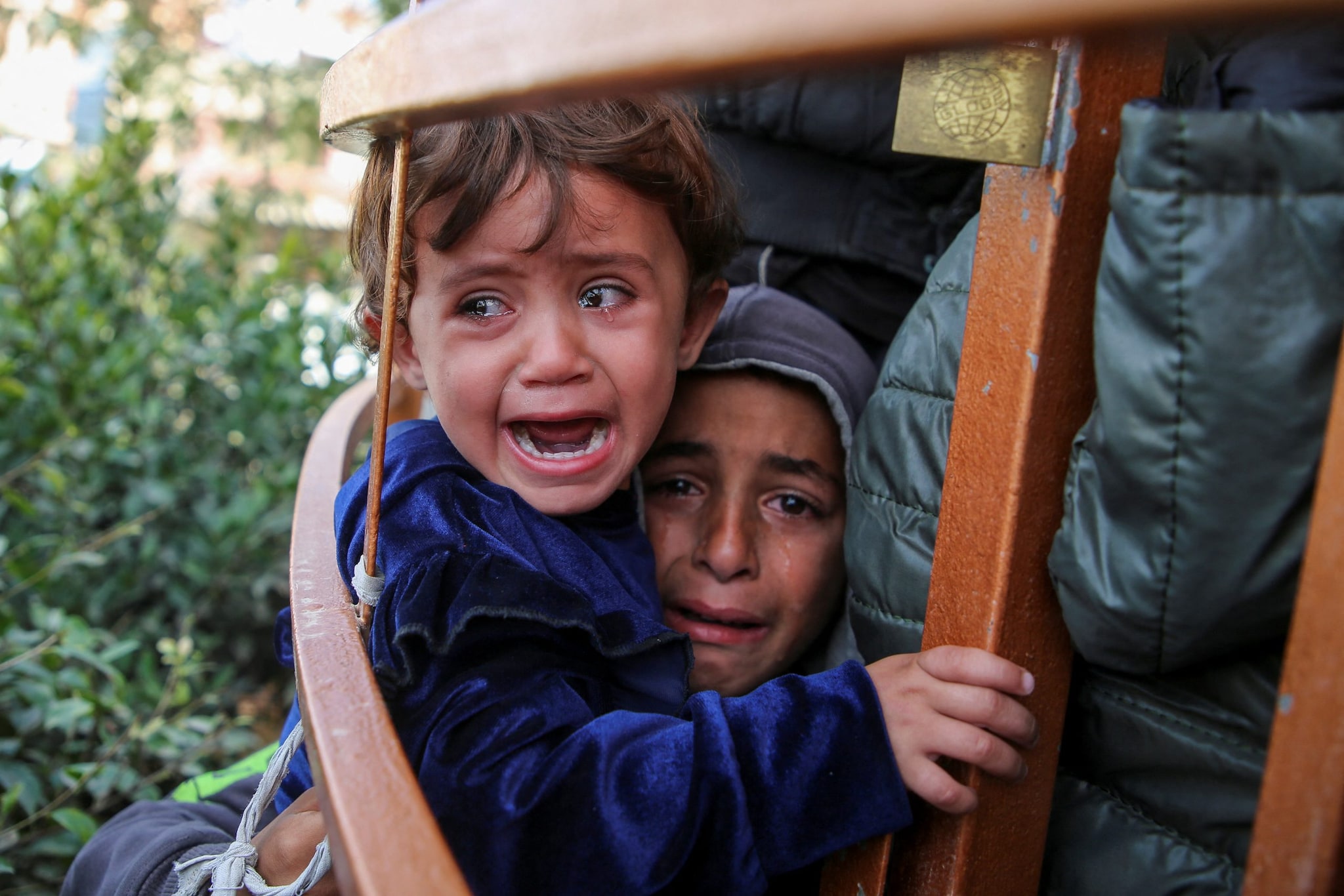
We have become dangerously efficient at ignoring the sound of silence. In 2024, approximately 4.9 million children died before their fifth birthday. That is one child every six seconds. If a jumbo jet carrying 300 children crashed every hour of every day, the world would grind to a halt in a state of global emergency. Instead, because these deaths happen behind the closed doors of mud-brick homes and in the overcrowded wards of underfunded clinics, they are treated as a statistical inevitability rather than a systemic failure.
The tragedy is not just the number. The tragedy is that we already have the tools to stop it. We are not waiting for a miracle drug or a breakthrough in quantum physics. We are failing to deliver the basics: clean water, basic vaccines, and enough food to keep a small body from eating itself. The 2024 data from the United Nations Inter-agency Group for Child Mortality Estimation (UN IGME) reveals a world that is making progress, yet remains comfortably numb to a level of loss that should be considered a crime against humanity.
The Geography of Survival
Where a child is born remains the single most accurate predictor of whether they will live to see a kindergarten classroom. This is the "lottery of birth" in its most brutal form. While the global mortality rate for children under five has dropped significantly since the turn of the century, the gap between the wealthiest and poorest nations is widening in ways that data often masks.
Sub-Saharan Africa and Southern Asia continue to shoulder the heaviest burden. In 2024, a child born in sub-Saharan Africa is roughly 20 times more likely to die before age five than a child born in a high-income country. This is not a matter of climate or bad luck. It is a matter of infrastructure. When you map these deaths, they align perfectly with the absence of paved roads, the lack of electricity for vaccine refrigeration, and the scarcity of trained midwives.
The survival of a child in these regions depends on a fragile chain of logistics. If a mother in rural Chad needs to walk twelve miles to reach a clinic that may or may not have antibiotics in stock, the system has already failed her. We often talk about global health as a matter of medicine, but for these 4.9 million, it is a matter of geography and civil engineering.
The Neonatal Death Trap
The most dangerous month of a human being's life is the first one. Nearly half of all under-five deaths—roughly 2.3 million—occur during the neonatal period, the first 28 days of life. This is where the progress has been the slowest. While we have made massive strides in treating childhood diseases like measles and diarrhea, we are struggling to keep newborns alive.
The causes are stubbornly consistent: preterm birth complications, birth asphyxia, and neonatal sepsis. These are clinical terms for a simple reality: babies are dying because there is no one there to help them breathe or because the environment they are born into is not sterile.
In many parts of the world, "health care" for a newborn is a luxury. Investing in neonatal care requires more than just a box of pills. It requires a 24-hour power supply for incubators and specialized training for nurses. When a hospital in a conflict zone or a neglected province loses power, the incubators become glass coffins. This is the reality of the 2024 data. It highlights a massive deficit in "stabilization" care—the ability to keep a fragile life going long enough for the body to take over.
The Hunger Multiplier
Malnutrition rarely appears on a death certificate as the primary cause of death. Instead, it acts as a silent force multiplier. A child with a healthy immune system can survive a bout of pneumonia or a week of diarrhea. A malnourished child cannot.
According to current estimates, undernutrition is a contributing factor in nearly 45% of all child deaths. When a child is stunted or wasted, their body diverts all energy away from the immune system to keep the heart and brain functioning. Common childhood ailments that would be a minor inconvenience in London or New York become death sentences in Yemen or the Democratic Republic of Congo.
The global food system is producing more than enough calories to feed the planet, yet distribution remains hijacked by conflict and economic volatility. In 2024, the spike in grain prices and the disruption of supply chains have pushed millions of families back into "acute food insecurity." We are seeing the results in the morgues. You cannot vaccinate a child against hunger, and you cannot expect a starving body to fight off an infection.
The Myth of Limited Resources
The most common excuse for this ongoing crisis is a lack of funding. This is a convenient fiction. The global community frequently finds trillions of dollars for military expenditures or corporate bailouts. The cost of preventing the majority of these 4.9 million deaths is a fraction of the world’s annual defense budget.
The issue is not a lack of resources; it is a lack of political will and the "devaluation of the distant." There is a psychological phenomenon where human empathy fails to scale with the size of a tragedy. We can mourn one child whose story we know, but we cannot comprehend 4.9 million.
The Cost of Basic Intervention
- Oral Rehydration Salts (ORS): Costs cents per dose and can stop the dehydration that kills hundreds of thousands of children annually.
- Insecticide-Treated Nets: A simple barrier that prevents malaria, yet millions of families still sleep without them.
- Skilled Birth Attendants: Having a trained professional present during labor reduces the risk of neonatal death by 20% to 30%.
These are not "moonshot" technologies. They are mid-20th-century solutions that we have failed to implement globally in the 21st century. The stagnation in funding for primary healthcare is a choice made by leaders in both donor and recipient nations.
Conflict as a Catalyst for Mortality
In 2024, the shadow of war has lengthened. Conflict does not just kill children through shrapnel and bullets; it kills them by destroying the systems that keep them alive. When a war breaks out, the first things to go are the vaccination programs.
In Gaza, Sudan, and Ukraine, we are seeing the total collapse of pediatric infrastructure. In Sudan, the internal displacement of millions has created a "dead zone" where routine immunizations have stopped. When a child misses their polio or measles shot because their family is fleeing a militia, that child becomes a statistic six months later when an outbreak hits a refugee camp.
Conflict also drives "brain drain." The doctors and nurses who are supposed to be saving these 4.9 million children are often the first to flee for their own safety. This leaves behind a hollowed-out medical system where the only people left to treat a dying toddler are untrained volunteers with no equipment. The 2024 UN report is as much a tally of our geopolitical failures as it is a health document.
The Data Gap and the Ghost Children
There is a chilling reality beneath the 4.9 million figure: it is an estimate. In many of the world's most vulnerable regions, children are born and die without ever being recorded by a government. They are "ghost children."
If a child dies in a remote village in the Amazon or a nomadic camp in the Sahel, their death may never reach a central database. This means the 4.9 million figure is likely a conservative baseline. Our inability to even count the dead accurately is a testament to how far these populations are from the "digital age" the rest of the world enjoys.
Improving civil registration and vital statistics (CRVS) is not just a clerical task. It is a fundamental human right. If a child’s death isn’t recorded, the government has no reason to build a clinic in that village. The data gap creates a cycle of neglect where the most marginalized remain invisible to the policymakers who hold the purse strings.
The Climate Penalty
Climate change is no longer a future threat to child survival; it is a present-day killer. In 2024, we have seen record-breaking heatwaves and unpredictable flooding that have devastated subsistence farming.
Children are more vulnerable to heat stress and waterborne diseases than adults. When floods contaminate a community's only water source, a cholera outbreak follows. When a drought kills a family's livestock, the children lose their only source of protein. We are essentially asking the world's poorest children to pay the "climate penalty" for a crisis they did nothing to create.
The 4.9 million deaths are increasingly tied to environmental instability. The "old" killers like malaria are moving into higher altitudes and new latitudes as temperatures rise. Our current health strategies are built for a stable climate that no longer exists.
The False Comfort of Progress
Global health organizations often point to the fact that child mortality has halved since 1990 as a sign of success. This is a dangerous narrative of complacency. While the trend line is moving in the right direction, the pace is nowhere near fast enough to meet the Sustainable Development Goals (SDG) for 2030.
At the current rate, dozens of countries will miss the target for reducing under-five mortality. This isn't just a missed deadline; it represents millions of preventable deaths over the next decade. We celebrate the "millions saved" while ignoring the millions we continue to lose to sheer apathy.
The reality of 2024 is that we have hit a plateau. The easy gains—the "low-hanging fruit" of global health—have been picked. What remains is the hard work of building permanent, resilient health systems in the world's most difficult places. This requires long-term investment rather than short-term, disease-specific "campaigns" that disappear when the media's attention shifts elsewhere.
Moving Beyond the Spreadsheet
To fix this, we must stop treating child mortality as a technical problem and start treating it as a political and moral crisis. The solution is not another white paper or a star-studded gala. The solution is the aggressive, unglamorous work of strengthening local health workforces.
We need to empower community health workers—local women and men who can provide basic care and education within their own neighborhoods. These workers are the front line. They are the ones who can identify a malnourished child or a case of pneumonia before it becomes fatal.
Furthermore, high-income nations must move beyond the "charity" model. Charity is fickle and dependent on the whims of donors. What is needed is a structural shift in how we fund global health, treating it as a global public good rather than a handout.
The 4.9 million children who died in 2024 did not die because we lacked the knowledge to save them. They died because their lives were not deemed worth the investment required to reach them. Every time we look at these numbers and fail to act with urgency, we are tacitly accepting that some lives are worth less than others based on where they begin.
The next step is to demand that global health funding be decoupled from political cycles. Until we treat the survival of a child in rural Mali with the same urgency as a viral outbreak in a major financial hub, the silence will continue to grow louder.