The clock on the wall in Deir el-Balah doesn't tick; it waits. It waits for the sound that every mother in Gaza has learned to translate with the precision of a master linguist. There is the high-pitched whistle of a drone, a mechanical mosquito that never sleeps. There is the low, guttural growl of an F-16. And then there is the silence.
Six months ago, the world used a word that suggested the waiting was over. Ceasefire. To a diplomat in a climate-controlled room in Cairo or Geneva, that word is a legal framework. It is a signed document, a press release, a diplomatic win. But to a father named Omar, sitting in the skeleton of what used to be a three-story apartment building, the word feels like a cruel joke told by someone who has never had to sleep with their boots on.
Omar is hypothetical, but his reality is repeated in every alleyway from Jabalia to Rafah. He represents the tens of thousands who were told the violence had hit a pause button. Yet, as the calendar pages turned from autumn to spring, the "pause" looked remarkably like the "play" button, just pressed with a slightly softer touch.
The numbers tell a story that the headlines often sanitize. We hear of "intermittent exchanges" or "localized operations." We read about "security corridors." What we don't read about is the way a child’s heart rate spikes when a door slams in a neighboring tent. We don't see the way the dust from a nearby strike settles into the flour meant for the evening meal, turning bread into grit.
The Anatomy of a Ghost Peace
What does it mean to live under a ceasefire that isn't? It means the infrastructure of survival continues to erode while the world’s attention drifts toward the next trending tragedy. It is a slow-motion catastrophe.
During these six months of supposed quiet, the strikes have never truly ceased. They simply became more surgical, or perhaps just more routine. For the people on the ground, the distinction between a full-scale invasion and a "targeted raid" is academic. The result is the same: the smell of cordite, the scream of sirens, and the agonizing wait to see whose name will be read over the mosque’s loudspeaker next.
Consider the logistics of a broken truce. When a ceasefire is announced, there is a rush of hope. Families attempt to return to their neighborhoods to see if anything is left. They find piles of grey rubble where their memories used to live. They begin the backbreaking work of clearing stones, thinking they have a window of safety. Then, the drones return. The "safety" evaporates like mist in the Mediterranean sun.
The psychological toll of this ambiguity is heavier than the bombs themselves. In total war, you know the enemy. In a fake peace, the enemy is the uncertainty. It is the hope that kills you. You start to believe you can plan for tomorrow, only for tomorrow to be cancelled by a midnight ordinance.
The Invisible Stakes of a Frozen Conflict
We often view these conflicts through a binary lens: war or peace. But there is a third state—a gray zone where life is suspended in a permanent state of high alert. This is where Gaza has existed for half a year.
The economic heart of the strip didn't just stop beating; it was surgically removed. Small businesses that tried to reopen during the "lulls" found that supply lines were still choked. Farmers who attempted to reach their lands near the perimeter were met with warning shots or worse. This isn't just about the absence of fighting; it’s about the presence of a suffocating control that dictates when you eat, when you sleep, and if you are allowed to exist at all.
Logic dictates that a ceasefire should allow for the massive influx of humanitarian aid. The reality has been a trickle through a rusted needle. Logistics are stalled by bureaucratic layers and security checks that turn a two-hour drive into a week-long odyssey. Meanwhile, the caloric intake of a generation of children drops. Stunting isn't just a medical term here; it’s a physical manifestation of a political failure.
A Symphony of Broken Glass
The sounds of Gaza are different now. Before, there was the bustle of the markets, the honking of taxis, the laughter of kids playing soccer on the beach. Now, the dominant sound is the crunch of broken glass. It’s underfoot everywhere. It’s in the beds, in the food, in the very air.
I remember talking to a doctor who described the "ceasefire" wounds. These aren't the dramatic injuries of a blitz. They are the infections from untreated shrapnel, the respiratory failures from breathing in pulverized concrete for months, and the catastrophic mental collapses of people who have been told the danger is over while the ceiling continues to shake.
He told me about a young girl who refused to speak. She wasn't hit by a missile. She just watched the sky for hours every day, waiting for the "peace" to explode. She is the living embodiment of the data points we see on our screens. She is the human cost of a word that has lost its meaning.
The Lie of the Strategic Pause
Why does the world accept this version of reality? Because it is easier to manage a "simmering" conflict than a "boiling" one. As long as the casualties stay below a certain threshold, it remains on the back pages. It becomes background noise.
But for those living in the noise, there is no background. There is only the foreground of survival. The international community speaks of "restraint" and "proportionality." These are cold, mathematical terms. They don't account for the fact that you cannot be "proportionally" terrified. You cannot have a "restrained" loss of your entire family tree.
The reality of these six months is that the war didn't end; it just changed its shape. It became a war of attrition against the soul. By maintaining a state of constant, low-level threat, the very fabric of society is unraveled. Schools remain shelters. Hospitals remain morgues. The "ceasefire" became a tool of siege, a way to maintain pressure without the pesky inconvenience of global outrage that follows a massive bombardment.
The Weight of the Dust
If you walk through Gaza City today, the first thing you notice is the dust. It’s a fine, grey powder that coats everything. It’s the dust of homes, of libraries, of lives. It gets into your lungs and stays there.
The people here don't talk about the ceasefire anymore. They talk about the next "event." They have stopped looking at the news and started looking at the birds. When the birds fly away suddenly, they know. They don't need a spokesperson to tell them the truce is a shadow.
We have grown comfortable with the idea that as long as there isn't a headline-grabbing massacre, things are "improving." We have accepted a standard for Palestinian life that we would never accept for our own. We call it "stability."
It is the stability of a graveyard.
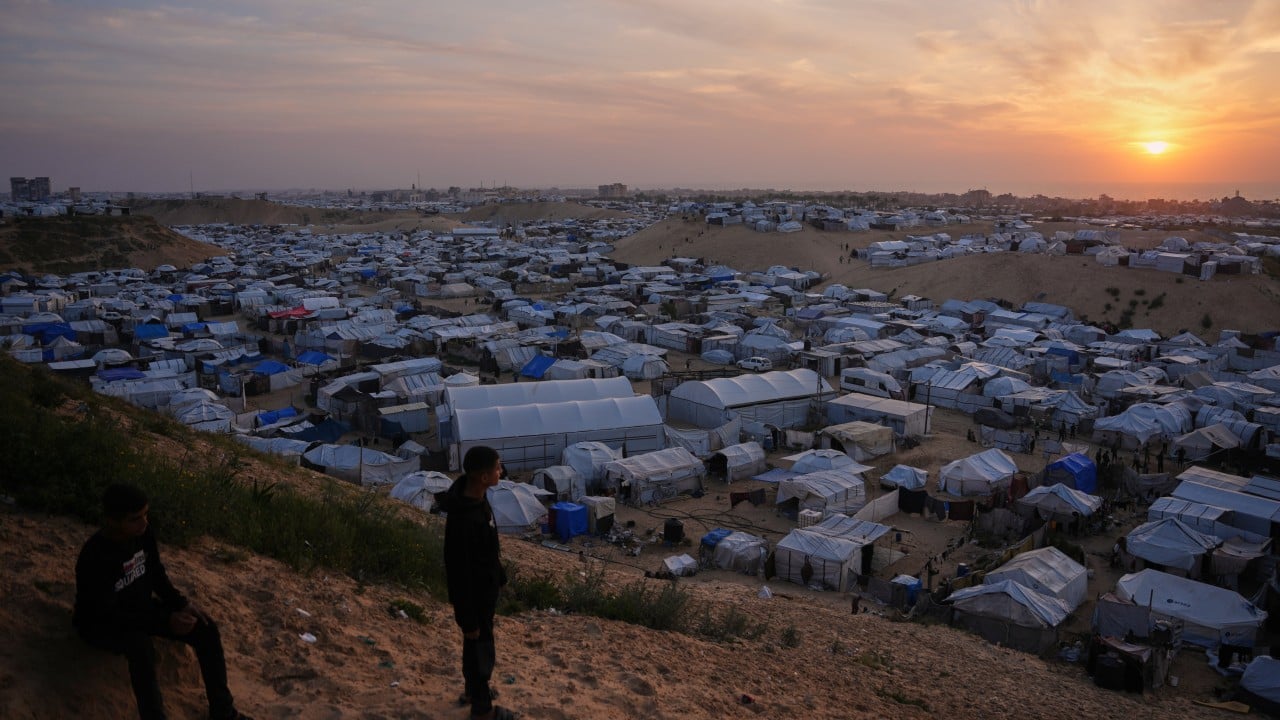
The sun sets over the Mediterranean, painting the sky in hues of orange and purple that seem almost too beautiful for the landscape they illuminate. For a brief moment, the drones are silenced by the wind. A mother pulls her children close in a tent that smells of salt and damp earth. She knows the silence is a lie. She knows that somewhere, a finger is on a trigger, and a coordinate is being typed into a computer.
She doesn't pray for a ceasefire anymore. She prays for the strength to survive the one she’s already in.