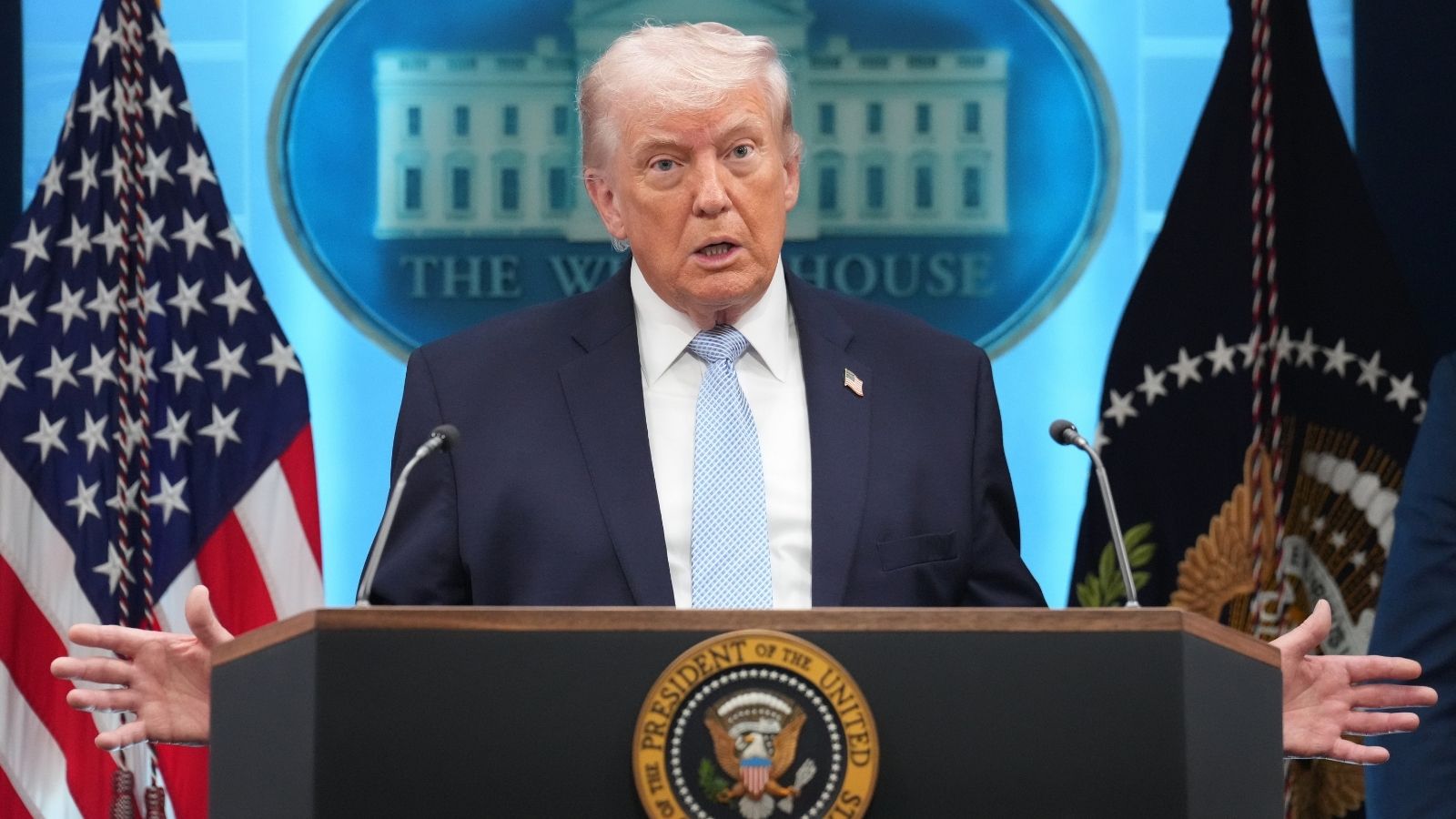
The political rhetoric surrounding the Strait of Hormuz is stuck in 1988. When politicians claim oil will flow "with or without" the cooperation of regional powers, they are selling a nostalgic fantasy of American naval hegemony that hasn’t been updated for the era of asymmetric saturation. The assumption that a massive fleet of gray hulls can guarantee the passage of 20 million barrels of crude per day against a determined modern adversary is not just optimistic; it is dangerous.
The "lazy consensus" among market analysts is that the U.S. Navy’s Fifth Fleet acts as an invisible insurance policy. They believe that as long as the carrier strike groups are in the neighborhood, the global economy is safe. This view ignores the brutal reality of modern physics and the plummeting cost of denial. We are no longer living in the era of the "Tanker War" where crude carriers could soak up a few Silkworm missiles and keep sailing. Today, the math has flipped.
The Myth of the Unstoppable Flow
The Strait of Hormuz is a 21-mile-wide bottleneck. At its narrowest, the shipping lanes are only two miles wide in either direction, separated by a two-mile buffer. This is not the open ocean; it is a shooting gallery. To suggest that oil flows regardless of local intent assumes that the threat is limited to conventional naval engagement.
It isn't.
The primary threat to the flow of oil isn't a fleet of destroyers. It is the democratization of precision-guided munitions. In the past decade, we have seen non-state actors and regional powers master the use of low-cost, high-impact suicide drones and swarm boats. If you launch 500 drones—each costing less than a used Toyota—at a single Ultra Large Crude Carrier (ULCC), you don't need to sink it to win. You just need to make it uninsurable.
The Insurance Kill Switch
This is where the political bravado meets the cold reality of the London insurance market. Lloyd’s of London and the global P&I clubs do not care about geopolitical speeches. They care about risk pools.
The moment a single tanker is disabled by a swarm of loitering munitions, the war risk premiums for the Persian Gulf will skyrocket. If a second ship is hit, those premiums will become prohibitive. If a third ship is lost, the "Market Reform" clauses kick in, and the shipping lanes effectively close themselves. No captain is going to sail a $100 million vessel carrying $200 million in cargo into a zone where the risk of total loss is 10%.
The U.S. Navy can provide escort, but they cannot provide a 360-degree, 24/7 kinetic shield against thousands of simultaneous threats. I’ve seen energy traders bet billions on the idea that "the Navy has this." They are fundamentally miscalculating the difference between patrolling a lane and securing a lane against asymmetric saturation.
The Technical Reality of Saturation
Defense systems like the Aegis Combat System are marvels of engineering, but they are governed by the laws of capacity. Every destroyer has a finite number of VLS (Vertical Launch System) cells.
$$C = \sum_{i=1}^{n} (m_i - d_i)$$
Where $C$ is the remaining defensive capacity, $m$ is the total number of interceptors, and $d$ is the number of incoming threats. In a high-intensity swarm scenario, the "magazine depth" becomes the single point of failure. When a billion-dollar ship spends its multi-million dollar missiles to knock down $20,000 drones, the economics of defense favor the attacker. Once the magazine is empty, the tanker it is protecting is nothing more than a slow-moving target.
Why Energy Independence Is a Geographic Lie
A common counter-argument is that "America is energy independent now, so Hormuz doesn't matter." This is a fundamental misunderstanding of how the global oil price functions. Oil is a fungible global commodity.
Even if the U.S. didn't import a single drop from the Middle East, a closure of the Strait would remove roughly 20% of the world’s supply overnight. The resulting price spike would be instantaneous and global. Brent crude wouldn't just move; it would teleport. You cannot "drill your way" out of a global supply chain collapse. The interconnectedness of the market means that a drone strike in the Strait of Hormuz is effectively a tax on every gas pump in Ohio.
The New Doctrine of Denial
The status quo assumes that the objective of an adversary would be to "seize" the Strait. This is the wrong question. Why would anyone try to seize a body of water when they can simply deny its use to everyone else?
Anti-Access/Area Denial (A2/AD) is the new reality. It is cheaper, more effective, and requires far less political capital than a conventional naval presence. By deploying mobile coastal batteries, smart mines, and submarine-launched cruise missiles, a regional power can create a "no-go" zone that stays active for months.
I’ve watched defense contractors pitch "solutions" to this for years. Most involve incredibly expensive laser systems that are always "five years away." The reality today is that the offensive side of the ledger is innovating faster and cheaper than the defensive side.
The Fallacy of "Escort Operations"
In the 1980s, "Operation Earnest Will" saw the U.S. Navy successfully escorting reflagged Kuwaiti tankers. People use this as a blueprint for modern success. But the 1980s didn't have:
- Hypersonic anti-ship missiles that reduce reaction times to seconds.
- AI-driven swarm intelligence that allows drones to coordinate their points of impact.
- Advanced sea-mining technology that can hide a "smart" mine on the seafloor for years.
Comparing the Tanker War to a potential conflict today is like comparing a game of checkers to 3D chess played with live explosives.
The Strategy of Forced Friction
The goal of disrupting the Strait isn't always total closure. It’s friction. If you can force tankers to wait for naval escorts, you create a massive backlog. If you can force them to take longer routes or stay in port during "high-threat" windows, you disrupt the just-in-time delivery systems that the global refinery complex relies on.
This friction creates volatility. Volatility creates fear. Fear creates a market environment where the fundamental value of the commodity is irrelevant compared to the perceived risk of its delivery.
Stop Asking if the Oil Will Flow
The real question isn't whether the oil will move. It’s whether the global financial system can survive the cost of moving it. When the "cost of security" exceeds the margin on the barrel, the flow stops by itself.
Politicians can promise that the lanes will stay open. They can send more ships. They can use the most aggressive language possible. But they cannot change the math of the magazine. They cannot force an insurance company to underwrite a suicide mission. And they certainly cannot protect every square inch of a two-mile-wide lane against an adversary that only needs to get lucky once.
The age of guaranteed maritime security is over. The "Hormuz Factor" is no longer a tail risk; it is a structural flaw in the global economy that no amount of naval posturing can fix.
The next time a leader tells you the oil will flow regardless of local tension, look at the VLS cell count on a destroyer and the price of a commercial drone. Then, look at your portfolio.
Get out of the way of the swarm.