The silence of a grounded fleet is heavy. It is a physical weight that sits on the chest of a city. For months, the runways at Sharjah, Abu Dhabi, and Ras Al Khaimah felt like museum exhibits—pristine, vast, and eerily still. Engines were capped with red plastic covers. Tires were rotated every few days just to prevent flat spots from the sheer pressure of gravity.
Then came the first low rumble.
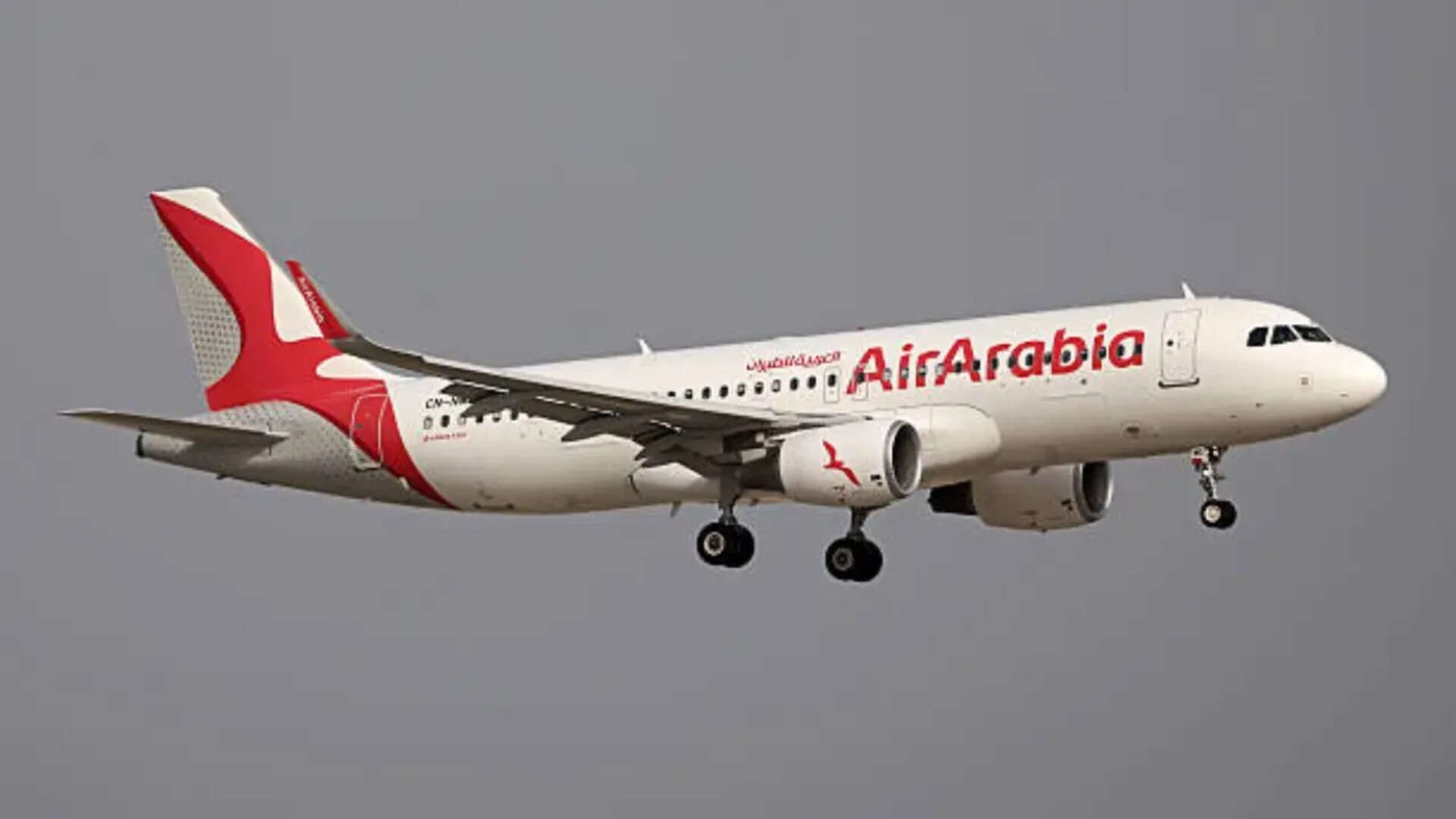
It wasn't just the sound of a CFM56 engine coming to life. It was the sound of forty-nine different worlds suddenly becoming reachable again. Air Arabia’s decision to resume services to forty-nine destinations wasn't a corporate checkbox; it was the restoration of a thousand invisible threads that bind the United Arab Emirates to the rest of the planet.
Consider a man named Omar. He is a hypothetical passenger, but his story is mirrored in every third seat of an Airbus A320. Omar hasn't seen his mother in Khartoum for eighteen months. He has lived his life through the flickering blue light of a smartphone screen, watching her age in pixels. For him, the news that flights are restarting from Sharjah isn't about "aviation recovery metrics." It is about the smell of home. It is about the physical reality of a hug that a digital connection can never replicate.
The Geometry of a Reconnected World
Air travel is often discussed in terms of "hubs" and "spokes." We treat these terms as if we are talking about bicycle wheels or logistics software. We shouldn't.
When Air Arabia opens a route from Ras Al Khaimah to Cairo, or from Abu Dhabi to Chittagong, they aren't just drawing a line on a map. They are reopening an economic and emotional artery. The UAE is a country built on the movement of people. When that movement stops, the heart rate of the region slows.
The logistics of this restart are staggering. To bring forty-nine destinations back online, you have to coordinate a dance involving thousands of moving parts. Pilots who have spent months in simulators must feel the bite of the wheels on actual asphalt. Cabin crews must recalibrate their internal clocks. Ground handlers in places like Peshawar, Istanbul, and Nairobi must prepare for the return of the white-and-red liveries they haven't seen in far too long.
The scale of this operation covers a massive geographical footprint. We are talking about the Levant, North Africa, the Indian Subcontinent, and Europe. Each of these destinations represents a different kind of necessity. Some are for the seekers—the tourists looking to lose themselves in the bazaars of Muscat or the history of Alexandria. Others are for the providers—the workers sending money home to families who have been waiting for the reliability of a steady flight path to return.
The Psychology of the Boarding Pass
There is a specific kind of magic in a boarding pass. It is a contract. It says that for a few hundred dirhams, you can defy the limitations of geography.
During the height of the travel restrictions, that contract was torn up. People felt trapped. Even if they had no immediate plans to leave, the inability to leave created a collective claustrophobia. The resumption of these forty-nine routes acts as a pressure valve. Even for those staying put, knowing the sky is open again changes the way the city feels.
Air Arabia has always occupied a specific niche in this ecosystem. They are the pragmatists. By focusing on point-to-point travel and low-cost models, they democratized the sky for a demographic that doesn't care about caviar in first class. They care about getting there. They care about the price of a ticket being low enough to allow for an extra suitcase of gifts for their nephews.
The restart from three different UAE hubs—Sharjah, Abu Dhabi, and Ras Al Khaimah—is a strategic move that acknowledges the country’s decentralized growth. Sharjah remains the spiritual home, the bustling center where it all began. Abu Dhabi provides the capital’s weight and connectivity. Ras Al Khaimah offers a gateway for the northern territories, ensuring that no one is more than a short drive away from a departure gate.
Beyond the Bottom Line
Industry analysts like to talk about "load factors" and "yield management." These are cold, bloodless terms.
The real story is found in the arrivals hall. It’s found in the frantic waving of a child who finally sees their father walking through the sliding glass doors. It’s found in the businessman who can finally shake hands on a deal in Kiev because a Zoom call couldn't convey the sincerity of his pitch.
We often forget that aviation is a trust-based industry. You are trusting a pressurized metal tube to hurtle through the air at thirty thousand feet. But more than that, you are trusting the airline to be a bridge. When that bridge is pulled away, the world shrinks. When it is lowered again, the world expands.
The list of forty-nine destinations is a roll call of recovery. Dhaka, Amman, Baku, Beirut. Each name represents a community that is being reintegrated into the UAE’s orbit. For the travel industry, this is a signal that the worst of the winter is over. The "new normal" is starting to look a lot like the old freedom, just with more masks and a greater appreciation for the privilege of flight.
The Mechanics of Safety and Certainty
Of course, the world has changed. You can’t just flip a switch and expect things to be as they were in 2019.
The restart is underpinned by a level of health and safety protocol that would have seemed like science fiction five years ago. This is the part where the narrative meets the cold reality of modern life. PCR tests, thermal screening, and HEPA filters are now as much a part of the journey as the safety demonstration.
Air Arabia had to prove not just that they could fly, but that they could do it without becoming a vector for the very thing that shut the world down. This required a total reimagining of the passenger journey. From the moment you check in on your phone to the moment you reclaim your luggage, every touchpoint has been scrutinized.
It is a delicate balance. How do you make a journey feel human when everyone is shielded behind plexiglass and PPE? The answer lies in the eyes. You see it in the crinkle of a flight attendant’s eyes as they welcome you aboard. You feel it in the steady, calm voice of the captain over the intercom. The technology is new, but the hospitality is ancient.
The Invisible Stakes
What happens if we don’t fly?
The cost of a grounded world isn't just measured in lost revenue for airlines. It’s measured in lost opportunities. It’s the student who can’t start their semester abroad. It’s the specialist doctor who can’t reach a patient in a neighboring country. It’s the cargo hold of an A320 that should be carrying life-saving medicines or the latest tech components but is instead sitting empty in a hangar.
By resuming these flights, Air Arabia is injecting liquidity back into the global soul. They are allowing the exchange of ideas, culture, and commerce to resume.
There is a ripple effect to every takeoff. A flight to Salalah doesn't just benefit the airline and the passengers. It benefits the taxi driver waiting at the airport. It benefits the hotel staff, the restaurant owners, and the tour guides. It is a giant, complex machine that requires constant motion to stay healthy.
The View from the Window Seat
There is a moment shortly after takeoff from Sharjah when the aircraft banks to the left. If the sky is clear, you can see the entire coastline of the Emirates stretched out like a glowing circuit board. To the west, the deep blue of the Arabian Gulf. To the east, the rugged Hajar Mountains.
For a long time, the planes weren't there to see it.
Now, forty-nine times over, that view is being rediscovered. We are seeing a return to the basic human instinct to explore, to connect, and to return. We are moving past the era of the "staycation" and back into the era of the journey.
The resumption of these services is an act of defiance against the isolation of the last few years. It is a statement that the borders are softening, that the skies are welcoming, and that the distance between us is finally starting to shrink.
The planes are back. The world is waiting. And the silence is finally, mercifully, broken.
The wheels leave the ground. The pressure changes in your ears. The clouds shift beneath the wing. You are no longer where you were, and you are not yet where you are going. You are in that beautiful, temporary space between two lives. That is the gift of forty-nine destinations. That is the miracle of the restart.
The tarmac is no longer a parking lot. It is a launching pad.