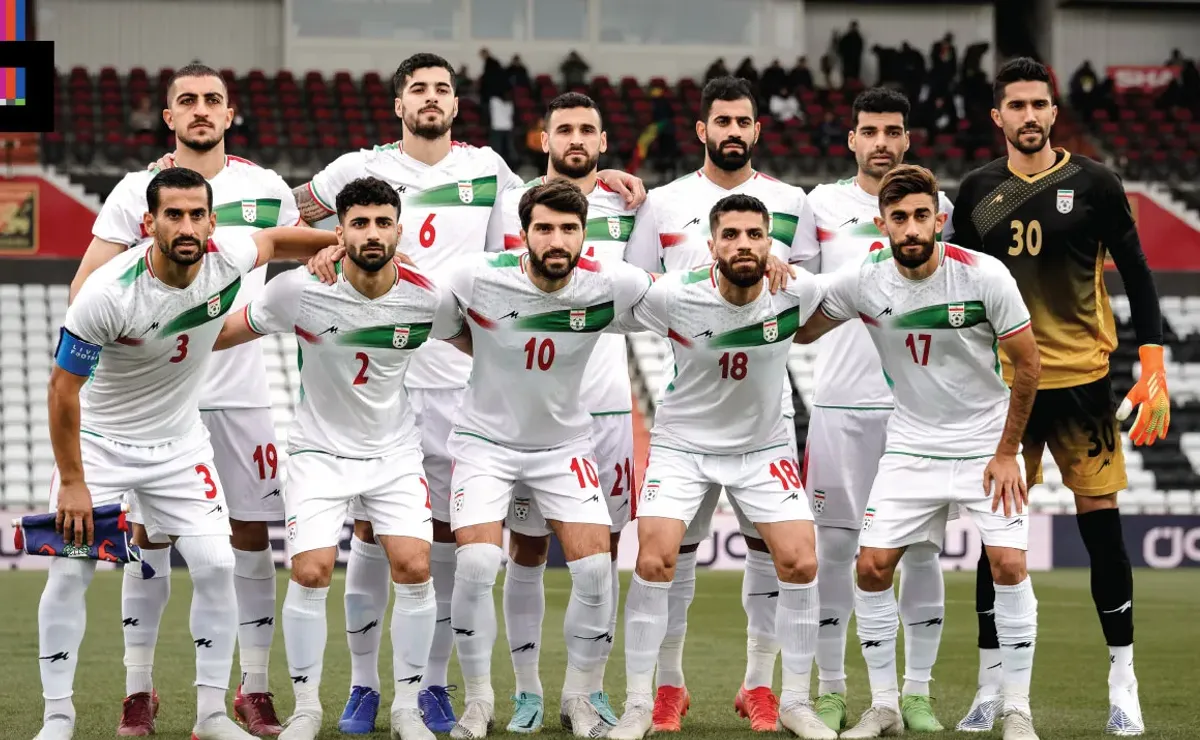
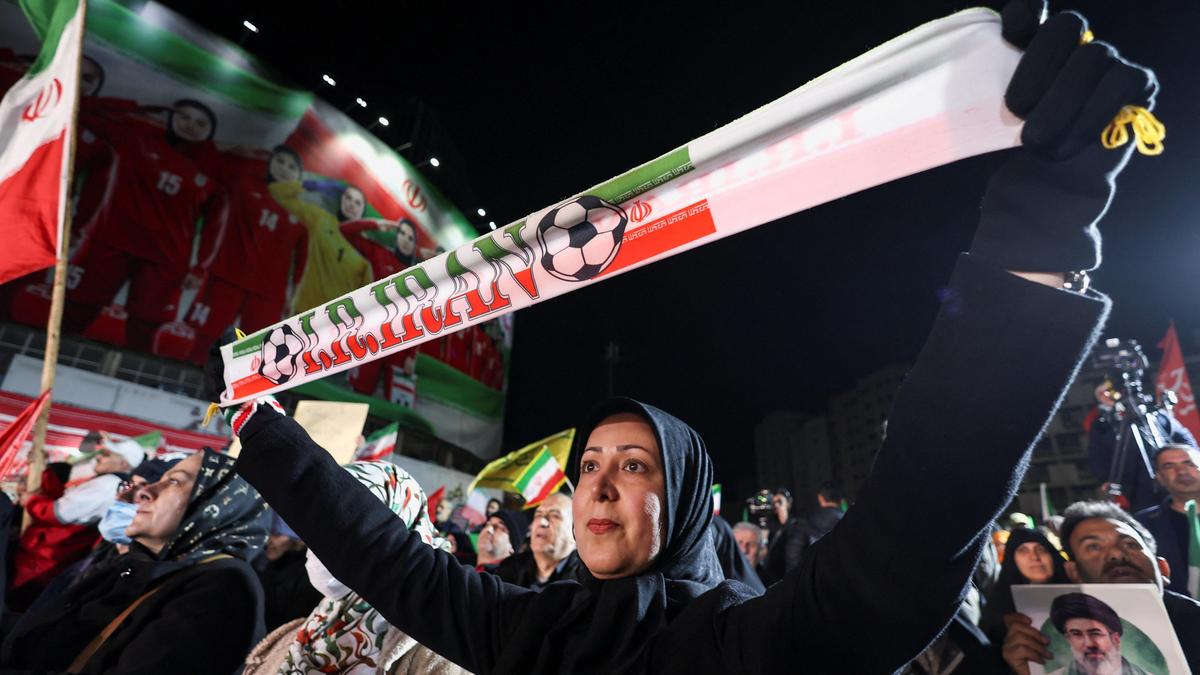
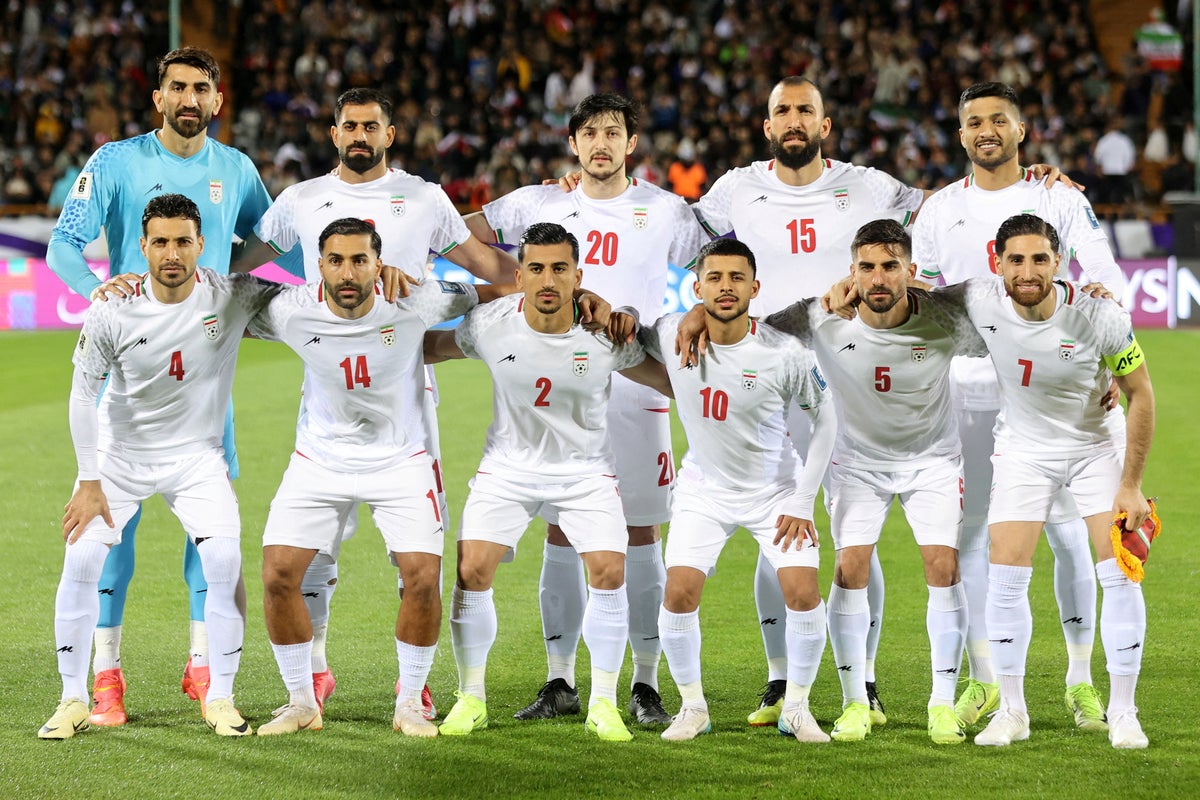
The removal of Sardar Azmoun from the Iranian national football team represents a critical intersection of athletic capital and state-driven ideological signaling. While surface-level reporting characterizes the event as a disciplinary measure for "disloyalty," a structural analysis reveals a calculated risk-mitigation strategy by the Football Federation of the Islamic Republic of Iran (FFIRI). The decision prioritizes the preservation of institutional optics over the optimization of on-field performance, effectively treating a premier sporting asset as a liability within a broader political survival framework.
The Duality of the Athletic Asset
In high-performance sports, a player of Azmoun’s caliber—a prolific striker with extensive European experience—functions as a high-yield asset. His value is quantifiable through goal-conversion rates, tactical flexibility, and international market valuation. However, within the Iranian context, this athletic value is perpetually weighed against Symbolic Compliance.
When an athlete’s public persona diverges from the state-sanctioned narrative, their "Athletic ROI" is subjected to a steep discount. The FFIRI operates under a governance model where the national team (Team Melli) serves as a primary vehicle for soft power and domestic cohesion. If a player’s presence threatens this cohesion—specifically through perceived alignment with dissent or "disloyalty"—the institutional cost of retaining them exceeds the competitive cost of their absence.
The Mechanics of Exclusion: A Tripartite Framework
The decision to exclude a top-tier performer is rarely impulsive; it follows a logical, albeit rigid, escalation of three distinct variables:
- The Divergence Threshold: This is the point where an athlete’s individual expression (social media activity, public statements, or symbolic gestures) moves from "manageable noise" to "structural threat." In Azmoun's case, the threshold was breached when his public stances aligned with social movements that challenged the state's moral authority.
- Institutional Contagion Risk: Leadership within the FFIRI fears that an unpunished outlier will normalize dissent within the squad. If one star player can openly defy expectations of political neutrality (or forced loyalty), the hierarchy of the entire coaching and management staff is compromised.
- The Substitution Deficit: The technical staff must calculate the drop in Expected Goals ($xG$) if Azmoun is removed. If the replacement player provides a significantly lower $xG$ but offers 100% ideological alignment, the federation accepts the performance hit as a "security premium."
Structural Pressures on the Coaching Staff
The role of the head coach in this ecosystem is not purely tactical. They operate as a middle manager between two conflicting stakeholders: the global sporting community (which demands results) and the domestic political apparatus (which demands conformity).
The "disloyalty" label functions as a bureaucratic tool. By framing the exclusion as a matter of team ethics rather than political censorship, the federation attempts to shield itself from FIFA sanctions regarding political interference in sport. This creates a bottleneck for the coaching staff, who must now re-engineer a tactical system—likely transitioning from a high-line attacking formation to a more conservative, defensive-heavy structure—to compensate for the loss of a world-class finisher.
The Economic and Brand Fallout
Excluding a player of Azmoun’s profile triggers a ripple effect across several financial and reputational dimensions:
- Commercial Devaluation: The national team's "brand equity" is tied to its stars. Removing a household name reduces viewership, jersey sales, and the leverage of the federation in international friendly negotiations.
- Player Pipeline Churn: Young talents observing the Azmoun case may prioritize dual-nationality options or overseas club stability over national team service, fearing that their career longevity is tied to political volatility rather than pitch performance.
- Tactical Regression: The loss of a focal point in the attack forces a redistribution of offensive duties. Without a high-gravity striker who draws multiple defenders, the remaining midfielders face increased pressure and higher turnover rates, leading to a measurable decline in ball retention in the final third.
The Security Premium and Performance Trade-offs
The FFIRI is essentially paying a "Security Premium." By removing a perceived dissident, they ensure a sterilized environment during high-stakes tournaments like the Asian Cup or World Cup qualifiers. The goal is to prevent a "press-conference crisis" where the team becomes a platform for social commentary rather than a sporting unit.
This creates a paradox: to save the team’s image, the federation risks the team’s success. In the short term, this may stabilize the internal hierarchy. In the long term, it creates a "Talent Drain" where the most elite performers—those with the most international mobility—are the most likely to be purged or to opt-out entirely.
Measuring the Impact of "Disloyalty" Narratives
The term "disloyalty" is strategically vague. In a data-driven sense, loyalty in sports is usually measured by attendance, work rate, and adherence to tactical instructions. By redefining loyalty to include extra-curricular political alignment, the FFIRI has moved the goalposts of professional evaluation.
This shift transforms the national team from a meritocracy into a loyalty-based hierarchy. The data suggests that loyalty-based systems eventually suffer from "Competence Decay." When selection is based on compliance rather than skill, the overall standard of the organization trends toward the mean.
The strategic trajectory for the Iranian national team now depends on whether the remaining squad can absorb the tactical deficit or if the internal friction caused by Azmoun’s absence creates further fractures. If the team underperforms in the next two international windows, the federation will face a choice: double down on the ideological purge or quietly reintegrate the "disloyal" assets under the guise of an "injury recovery" or "public apology."
The current move signals a preference for control over excellence. Organizations that prioritize internal narrative stability over external performance indicators typically experience a decline in competitive ranking within 18 to 24 months. For Team Melli, the cost of this "security premium" will be visible in the next major tournament's knockout stages.