The key does not look like much. It is heavy, forged from rusted iron, with a circular bow that has been rubbed smooth by three generations of thumbs. For an elderly man in a village outside Hebron, this piece of metal is not a tool. It is a biological extension of his history. It represents a door that no longer exists, leading to a hallway that has been reduced to dust, standing on land that a recent United Nations report says is being systematically cleared of its original inhabitants.
Data is cold. It speaks of "administrative demolitions," "settler violence," and "coercive environments." But data does not smell like the smoke of a burning 400-year-old olive tree. It does not feel like the gritty wind of the Area C highlands where families are watching their geography vanish in real-time.
To understand the displacement in the West Bank, you have to stop looking at maps and start looking at the dirt.
The Architecture of Invisibility
Imagine waking up to find that the dirt beneath your feet has become a legal minefield. In the West Bank, specifically in the 60 percent of the territory known as Area C, the act of living has become a revolutionary struggle. The UN High Commissioner for Human Rights recently detailed a spike in state-backed displacement that is shifting the very DNA of the region.
Consider a hypothetical family: the Al-Najjars. They don't live in a high-rise. They live in a modest stone home built by a grandfather. One morning, a soldier delivers a piece of paper. It says the house lacks a permit. In the eyes of the bureaucracy, the home is an "illegal structure."
The irony is thick enough to choke on. Between 2016 and 2020, reports indicate that over 98 percent of Palestinian building permit applications in Area C were rejected. It is a rigged game. You are told to build legally, but the door to legality is welded shut. When the bulldozers eventually arrive, they don't just move stones. They erase the evidence of a life.
This is the "coercive environment." It isn't always a violent explosion. Often, it is a slow, grinding pressure. It is the cutting of a water pipe. It is the sudden appearance of a fence that cuts a farmer off from his grazing land. It is the realization that the nearby settlement has electricity and paved roads while your village is forbidden from even fixing a pothole.
The Silence of the Hills
Violence in this region is often portrayed as a two-sided clash of armies. The reality on the ground is frequently more lopsided and intimate. The UN report highlights a terrifying trend: settler violence used as a tool for state expansion.
Since October 2023, the frequency of these attacks has escalated into a rhythm of terror. Masked men arrive at night. They burn crops. They kill livestock. They threaten families with a simple choice: leave or die. When the state fails to intervene—or worse, when soldiers stand by as witnesses—the message to the villagers is deafening.
You are alone.
One farmer described the feeling of watching his sheep being led away by strangers. It wasn't just the economic loss, though that was devastating. It was the psychological hollow left behind. In pastoral societies, your animals are your legacy. They are your children's tuition and your daughter's dowry. When they are stolen, your future is stolen.
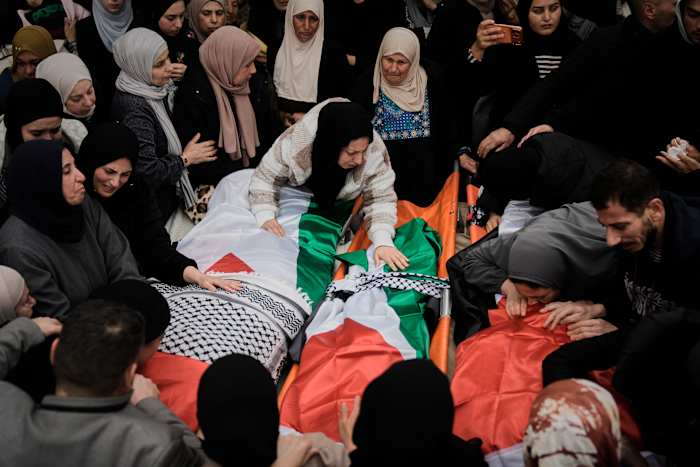
The report notes that hundreds of people, including children, have been forced to flee their communities in the last year alone. These aren't people moving for better jobs or a change of scenery. They are internal refugees, pushed into increasingly crowded urban enclaves, disconnected from the land that defined them.
The Cost of a Memory
We often talk about human rights as abstract principles discussed in glass buildings in Geneva. On the ground, a human right is the ability to bake bread in a clay oven without fear of a drone overhead. It is the right to plant a seed and know you will be the one to harvest it.
The displacement in the West Bank is a process of un-making. When a school is demolished—and dozens have been—the damage isn't just in the bricks. It is in the minds of the students who learn that their world is temporary. They learn that the law is not a shield, but a sword used against them.
Consider the psychological toll of "active displacement." It creates a permanent state of hyper-vigilance. Parents stop sleeping. They listen for the sound of engines in the night. They watch the hilltops for the shimmer of flashlights. This isn't just a political struggle; it is a mental health catastrophe unfolding in the open air.
The UN report points to a "clear pattern" of actions designed to facilitate the annexation of the land. By making life unbearable for the indigenous population, the path is cleared for others to move in. It is a demographic engineering project hidden behind the language of security and zoning.
The Invisible Stakes
Why should someone thousands of miles away care about a dusty ridge in the West Bank?
Because the erosion of international law in one place is a threat to it everywhere. If a state can move its own population into occupied territory while systematically purging the local residents through "coercive environments," the post-WWII legal order is dead. We are returning to a world where "might makes right" is the only statute that matters.
The stakes are also deeply human. Every family forced out of a village like Wadi as-Seeq or Zanuta carries a story of resentment that will last for generations. Displacement does not end a conflict; it freezes it in its most volatile state. It ensures that the next generation will grow up with the image of a bulldozer as their primary interaction with their neighbor.
There is a profound sadness in the West Bank that the news cameras rarely catch. It is the silence that follows a demolition. After the dust settles and the soldiers leave, there is a moment of absolute stillness. The family stands on the rubble of their kitchen. Maybe they find a cracked tea saucer or a child's toy.
They don't scream. They just look.
The Key and the Concrete
That rusted iron key remains. It hangs on walls in refugee camps in Ramallah and Jordan. It is passed from father to son.
The UN report is a document of facts, but between its lines is a story of profound endurance. Despite the "coercive environment," many families refuse to leave. They sleep in tents next to their demolished homes. They rebuild with mud and tires when they are forbidden from using concrete.
This is "Sumud"—steadfastness.
It is a quiet, stubborn refusal to be erased. It is the act of planting a new olive tree even when you know it might be uprooted tomorrow. It is the belief that while laws can be manipulated and homes can be crushed, the connection to the earth is something no bureaucracy can ever truly own.
The world watches the numbers climb. 600 structures destroyed. 1,200 people displaced. 4,000 trees burned. But the real story is found in the eyes of a grandmother standing in the wind, holding a deed from a country that no longer exists, waiting for a justice that seems stuck in the clouds.
She is not a statistic. She is the living memory of a land that is being rewritten, one stone at a time, until the original script is gone.
The bulldozers are loud, but the memory of the soil is longer.
Would you like me to look into the specific legal frameworks mentioned in the UN report to see how they contrast with international humanitarian law?