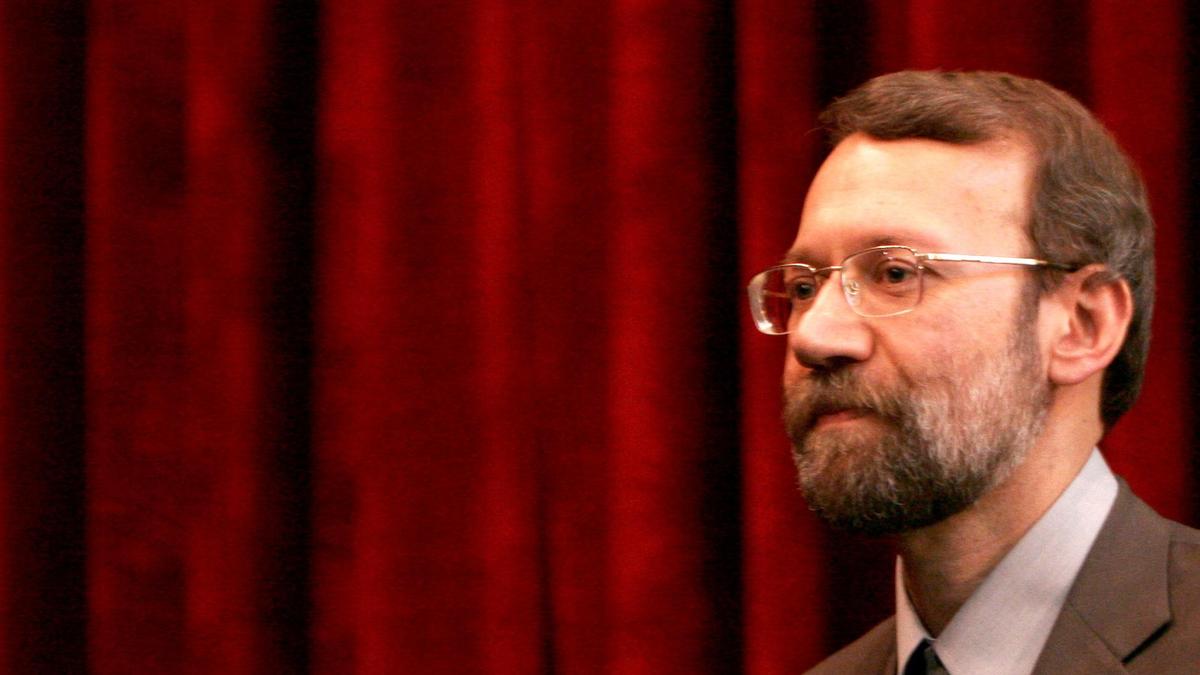
The targeted killing of Ali Larijani, a pillar of the Iranian political establishment and a key intermediary for the Supreme Leader, represents more than a tactical success for Israeli intelligence. It is a fundamental shift in the geometry of Middle Eastern warfare. For decades, the "shadow war" between Jerusalem and Tehran operated under a set of unwritten rules where proxies fought on the fringes while the architects of those conflicts remained safe within their respective borders. Those rules are now ashes.
With the death of Larijani, Israel has signaled that the era of "strategic patience"—Tehran’s long-standing policy of absorbing tactical losses to ensure the survival of the regime—is being met with a policy of systematic liquidation. The subsequent vow to target the Supreme Leader himself moves the conflict from the realm of regional influence into an existential endgame. This is no longer about slowing down a nuclear program or trimming the "grass" of Hezbollah’s rocket stockpiles. It is a direct assault on the command-and-control heart of the Islamic Republic.
The Weight of the Larijani Loss
Ali Larijani was not a typical military commander. He was the quintessential "insider," a man who bridged the gap between the pragmatic conservative wing and the ideological core of the Revolutionary Guard. Having served as the Speaker of the Parliament and a lead nuclear negotiator, he held the institutional memory of the state.
His removal creates a vacuum that cannot be filled by a younger, more radical officer. Larijani understood the delicate balance of international diplomacy and internal Iranian power dynamics. When you remove a figure of this caliber, you don't just lose a strategist. You lose a stabilizer.
The precision of the strike suggests a catastrophic breach within the Iranian security apparatus. To hit a high-level official like Larijani requires real-time human intelligence and technical penetration that points to a compromised inner circle. Tehran now faces a dual crisis: the physical loss of a leader and the psychological terror of knowing that their "secure" locations are transparent to their adversary.
Moving Toward the Throne
The explicit threat against the Supreme Leader is a rhetorical escalation that the world hasn't seen since the 1979 revolution. By naming the head of state as a legitimate target, Israel is betting that the Iranian system is brittle. The logic is simple but high-risk. If the head is removed, the body—the various militias, the internal security forces, and the economic conglomerates—will fracture.
However, this ignores the historical resilience of ideological states. Often, when a central figure is martyred, the resulting power vacuum isn't filled by a moderate reformer. It is filled by the most radical elements who no longer feel the need to exercise restraint.
The Succession Crisis in Real Time
Iran was already struggling with a succession plan for the aging Ali Khamenei. The elimination of Larijani removes one of the few figures who could have managed a "soft" transition. Now, the Islamic Revolutionary Guard Corps (IRGC) is likely to take total control of the selection process.
- The Hardline Ascendance: Expect the next tier of leadership to be significantly less interested in diplomatic backchannels.
- The Proxy Response: Without a central figure to coordinate the "Axis of Resistance," individual groups like the Houthis or remnants of Hezbollah may begin acting autonomously, leading to unpredictable regional chaos.
- Nuclear Acceleration: If the regime feels its top leadership is marked for death, the argument for a "nuclear deterrent" becomes the only logical survival strategy in their eyes.
The Failure of Deterrence
For years, the West believed that economic sanctions and occasional sabotage would keep Iran in check. That theory has failed. Iran’s regional expansion continued despite the "maximum pressure" campaigns of previous years.
Israel’s current strategy is a recognition that you cannot deter an ideological movement through ledger books alone. They are now employing a strategy of "decapitation as deterrence." The message is clear: if you fund the destruction of our state, your life is the price.
This creates a terrifying feedback loop. To prove they are still relevant and powerful, the Iranian leadership must retaliate. But if they retaliate too strongly, they invite the very decapitation strike they fear. They are trapped in a corner, and a cornered regime is the most dangerous kind of actor on the global stage.
The Intelligence War Within
The most significant takeaway from the recent months of operations is the total dominance of the intelligence sphere. It is one thing to win a tank battle; it is another to know exactly which room a target is sleeping in at 3:00 AM in a foreign capital.
The IRGC has spent billions on air defense and electronic warfare. None of it mattered. The failure is not in the hardware, but in the human element. The Iranian state is currently a sieve. Disaffected officials, economic misery, and a younger generation that feels no loyalty to the 1979 ideals have created a fertile ground for recruitment by foreign agencies.
Every time a Larijani or a Mohsen Fakhrizadeh is killed, the Iranian leadership looks at one another with suspicion. This internal paranoia is a feature of the Israeli strategy, not a bug. They are forcing the regime to eat itself from the inside out.
The Regional Repercussions
Neighbors like Saudi Arabia and the UAE are watching this with a mixture of quiet satisfaction and absolute dread. While they would love to see Iran’s influence curtailed, they are the ones who will pay the price if the Persian Gulf becomes a theater of total war.
The global energy market is also operating on a knife's edge. A desperate Iranian regime could attempt to close the Strait of Hormuz, a move that would send oil prices into a vertical climb and trigger a global recession. This is the "Samson Option" for Tehran—if they are going down, they will take the global economy with them.
Counter-Arguments to the Decapitation Strategy
There is a school of thought in some intelligence circles that these killings are counter-productive. The argument posits that by removing the "rational actors" like Larijani, Israel is clearing the path for the true zealots.
- Loss of Channels: Who does the West talk to when the communicators are dead?
- Radicalization of the Youth: While many Iranians hate the regime, they also have a strong sense of national pride. Foreign assassinations can sometimes bridge the gap between a frustrated public and a desperate government.
- The Martyrdom Myth: The Islamic Republic is built on the theology of martyrdom. These deaths provide the propaganda fuel needed to sustain another decade of hardship.
The Real Cost of the End of Restraint
We are entering a period where the traditional "red lines" no longer exist. In the past, targeting a Supreme Leader was considered the "nuclear option" of conventional warfare—something that would trigger an immediate, all-out regional war. By putting it on the table, Israel is betting that Iran is too weak to respond in kind.
If Israel is right, the regime will collapse or retreat. If Israel is wrong, we are looking at a multi-front war that involves every major power in the world. The death of Ali Larijani is not the end of a chapter. It is the beginning of a much darker book.
The focus now shifts to the streets of Tehran and the bunkers of the IRGC. If they cannot protect their most senior diplomats and strategists, they cannot protect their future. The silence from the Iranian leadership in the hours following the vow to target the Supreme Leader speaks volumes. They are recalculating. But in the modern theater of war, by the time you have finished the math, the next missile is already in the air.
Watch the movements of the Iranian "shadow" fleet and the domestic security updates in the coming 72 hours. If the IRGC begins a mass internal purge of its own ranks, we will know the paranoia has finally won.