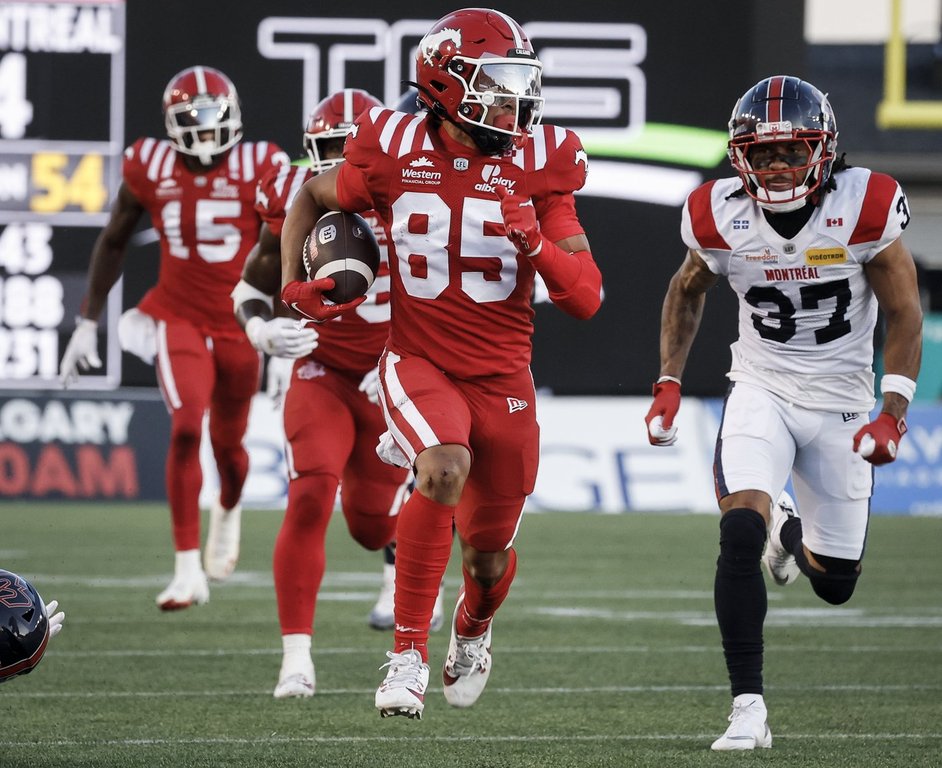
The Canadian Football League is preparing to dismantle its own geography. By the time the 2027 season kicks off, the 110-yard field, the sprawling 20-yard end zones, and the iconic, dangerous placement of goalposts on the goal line will be historical footnotes. For Montreal Alouettes star receiver Tyson Philpot, who recently tethered his prime years to the league with an extension through 2027, these shifts are more than just cosmetic. They represent a fundamental restructuring of how Canadian football is played, coached, and valued. While the league office pitches these moves as an "evolution" designed to spike scoring by 60 touchdowns a season, those who have bled on the turf see a more complex reality. This is the systemic Americanization of a century-old product, a desperate reach for relevance that risks trading the league's soul for a higher television rating.
The Geometry of Desperation
For decades, the CFL has prided itself on being "different." The massive 110-yard field and those cavernous 20-yard end zones created a wide-open style of play that the NFL simply could not replicate. But the league’s 2027 mandate will shrink the field to 100 yards and trim the end zones to 15 yards.
Why the sudden interest in a smaller footprint? It isn't just about making the game faster. It is about stadium logistics and the bottom line. Modern multi-purpose stadiums are increasingly designed for the 100-yard standard of soccer and the NFL. By forcing the CFL into a smaller box, the league makes its product easier to host, cheaper to maintain, and more palatable for potential expansion cities that lack the space for the traditional "big" Canadian field.
The goalposts, currently a central obstacle on the goal line, will migrate to the back of the end zone. The league projects a 10 percent increase in end-zone completions once that upright-shaped "thirteenth defender" is removed. Safety is the public-facing excuse—players have been colliding with those steel pipes for a hundred years—but the real driver is the red zone. The league wants more "explosive" plays and fewer tactical grinds.
The Strategic Cost of the 15-Yard End Zone
Philpot and his peers are being told these changes favor the offense. On paper, it sounds logical. Move the goalposts back, and you open up the middle of the field for high-crossers and post routes. But football is a game of spacing. When you shave five yards off the back of the end zone, you lose the "vertical threat" that forces a safety to play deep.
In a 20-yard end zone, a receiver can run a full speed vertical route and still have room to track the ball. In a 15-yard end zone, the back line arrives quickly. Defenses will compress. The "waggle"—that beautiful, chaotic running start Canadian receivers get—will suddenly feel like running into a wall. The league expects more touchdowns, but they might find they’ve created a "clogged" scoring zone where windows are tighter and the margin for error is razor-thin.
Killing the Rouge to Save the Game
Perhaps the most controversial pillar of the 2026-2027 rollout is the modification of the rouge. The single point awarded for a missed field goal that sails through the end zone is being executed. Starting in 2026, if you miss, you get nothing.
The rouge is the most "Canadian" thing about the CFL. It rewarded a kicker for leg strength and forced a returner into a high-stakes decision: concede the point or fight his way out of the end zone. By removing the point for "errant" kicks, the league is effectively telling kickers that near-misses don't matter.
This change is designed to eliminate the "anti-climax" finish—the game decided by a missed kick that still scores. Fans in Toronto or Vancouver might find that finish confusing, but for the prairie die-hards, the rouge was a tactical chess piece. Removing it doesn't just change the score; it changes the late-game math for every head coach in the league.
The Philpot Factor and the Olympic Pivot
Tyson Philpot is the poster child for the "New CFL." Fast, versatile, and savvy enough to keep an "open mind" about the 2027 changes, he represents a generation of athletes who are looking beyond the three-down game. His aspirations for the 2028 Summer Olympics—where flag football will make its debut—suggest a shift in how elite Canadian talent views the gridiron.
Philpot’s extension through 2027 keeps him in Montreal during this transition, but his focus on the international stage is a symptom of the league's identity crisis. If the CFL makes its rules and its field look more like the American game (and the flag game), it becomes a better training ground for the NFL and international play. But does it remain a unique destination?
A Faster Clock for a Shorter Attention Span
The 2026 phase includes an automatic 35-second play clock that triggers the moment the previous play ends. Currently, the 20-second clock only starts when the official whistles it in, leading to a leisurely pace that can feel sluggish to a younger audience raised on TikTok and red-zone highlights.
The intent is to force a "hurry-up" culture across all four quarters. Combined with the requirement that benches be on opposite sides of the field to speed up substitutions, the league is trying to shave "dead air" from the broadcast. It’s a television-first strategy. The league needs a product that moves at the speed of modern media, even if it means exhausted defensive linemen are more prone to the very injuries the league claims it wants to prevent.
The High-Stakes Gamble
The CFL is betting that fans care more about scoring than tradition. They are betting that a 100-yard field will look better on a smartphone screen and that 60 more touchdowns a year will drown out the complaints of the "110-yard purists."
But there is a danger in becoming "NFL Lite." When you remove the unique dimensions of the field and the quirky scoring of the rouge, you are competing directly with the most powerful sports league on the planet on their own terms. The CFL has survived for over a century precisely because it offered something you couldn't get anywhere else.
By 2027, the yardage will be shorter, the uprights will be further away, and the rouge will be a ghost. The game will be faster, sure. It might even be higher scoring. But it will also be smaller, in every sense of the word. Tyson Philpot will be there to catch the passes, but the field he’s running on will feel a lot more like a cage than a wide-open prairie.
Watch the corners. When the field shrinks, the hits get harder.