Pope Leo XIV, the first American to ascend to the throne of St. Peter, has made one thing clear as he touches down in Algiers for an 11-day tour of Africa: he will not be bullied into silence by the White House. Following a weekend of vitriolic attacks from President Donald Trump, who labeled the pontiff "weak on crime" and "terrible for foreign policy," the Pope told reporters aboard the papal flight that he has "no fear" of the administration. This is not merely a spat between two world leaders; it is a fundamental collision between the Vatican's ancient mandate for peace and a presidency that has increasingly used religious imagery to justify a war of choice against Iran.
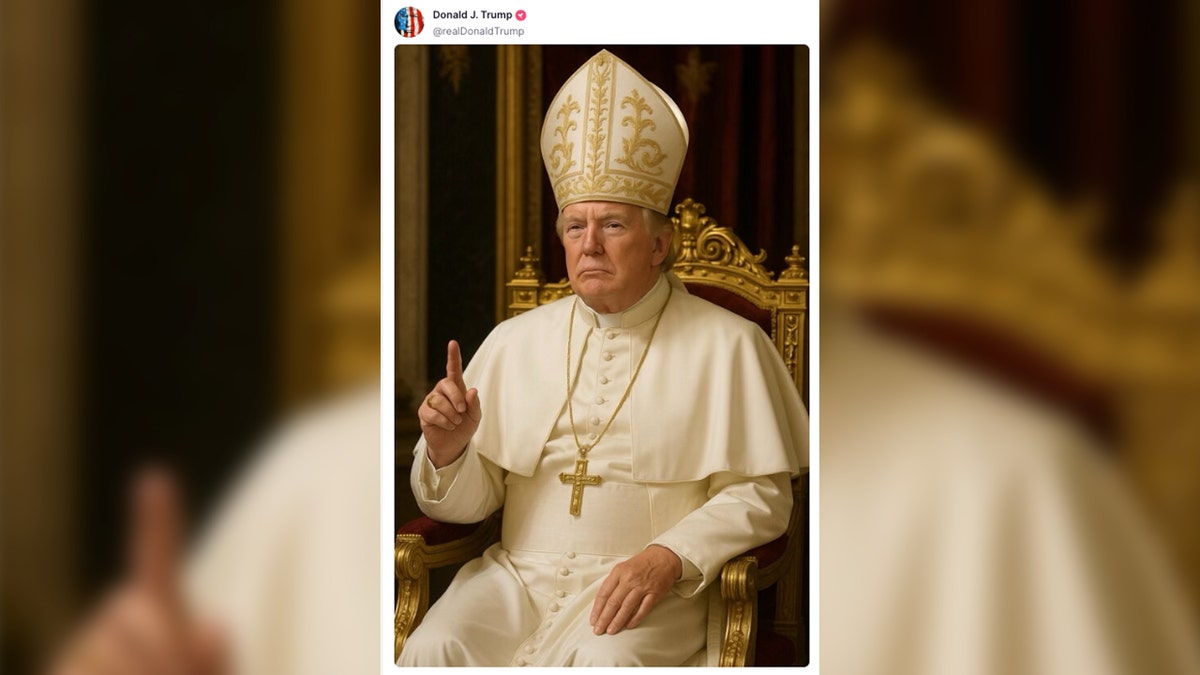
The conflict reached a boiling point after Leo XIV described the President’s threats to destroy Iranian civilization as "unacceptable." Trump’s response was swift and characteristically personal. On Truth Social, the President claimed that if he weren't in the White House, "Leo wouldn't be in the Vatican," suggesting he played a hand in the 70-year-old American’s election. He further stirred controversy by sharing an AI-generated image depicting himself with Christ-like powers, a move that alienated even some of his most staunch evangelical supporters before it was eventually scrubbed from the platform.
The American Pope vs. The MAGA President
The irony of this showdown is that both men represent competing visions of American influence. Leo XIV, born in the United States, was seen by many as a bridge-builder who could speak the language of the West while maintaining the Church’s global moral authority. Instead, he has become a primary target for an administration that views any calls for de-escalation as a betrayal of national interests.
Trump’s critique hinges on a refusal to see the papacy as anything other than a political office. By accusing the Pope of being "very liberal" and "toying with a country that wants a nuclear weapon," the President is attempting to frame the Gospel’s call for peace as a partisan policy failure. This tactic seeks to delegitimize the Pope’s moral standing among the 70 million Catholics in the United States, many of whom supported Trump in the 2024 election.
A Theology of Conflict
The theological rift is perhaps more dangerous than the political one. While the Vatican argues that the current hostilities in the Middle East do not meet the criteria for a "just war," the Trump administration has leaned into a rhetoric of divine endorsement. Defense Secretary Pete Hegseth recently urged victory "in the name of Jesus Christ," and the President himself stated that God approves of the war because "God is good."
Leo XIV has countered this by warning against a "delusion of omnipotence" that he believes is driving global instability. In his Ash Wednesday liturgy, he lamented that international law is being reduced to "ashes." By positioning the Church as a voice for the victims of war—specifically those in Iran and Venezuela—the Pope is directly challenging the administration’s narrative of a holy crusade against "evil" regimes.
Digital Warfare and the AI Image Scandal
The use of AI-generated imagery in this conflict marks a shift in how political and religious authority is contested. When Trump posted the image of himself as a savior-like figure, it wasn't just a lapse in social media judgment; it was a calculated attempt to claim the moral high ground through visual manipulation.
The swift backlash from conservative commentators like David Brody of the Christian Broadcasting Network highlights a rare moment where the President’s base drew a line. * The Claim: The image was intended to show the President as a "doctor" making the country better.
- The Reality: The iconography was unmistakably messianic, designed to resonate with a specific brand of Christian nationalism.
- The Result: The image was removed, but the message remained—this administration views the President’s mandate as something that transcends traditional checks, including those from the Holy See.
The Global Implications of the African Tour
As the Pope moves through Algeria, Cameroon, Angola, and Equatorial Guinea, his message of peace is not just for Washington. He is visiting a continent where the scars of civil war and colonial struggle are still fresh. In Algiers, he plans to honor the victims of the 1954-1962 war of independence, a move that reinforces his commitment to recognizing the human cost of geopolitical strife.
This trip serves as a deliberate counter-programming to the "America First" rhetoric. By focusing on multilateralism and the suffering of innocent civilians, Leo XIV is signaling that the Vatican will continue to provide an "off-ramp" for conflict, regardless of how much pressure is applied by the United States.
A Church Divided
The fallout in the United States is palpable. Archbishop Paul Coakley, president of the U.S. Conference of Catholic Bishops, has expressed dismay over the President’s disparaging words, emphasizing that the Pope is not a "political counterpart." Yet, the administration has sought to exploit existing divisions within the Church, with Trump publicly favoring the Pope’s brother, Louis Prevost, a self-described "MAGA type."
This strategy of "divide and conquer" within the Catholic community is a high-stakes gamble. While it may solidify support among a specific segment of conservative voters, it risks permanently fracturing the relationship between the U.S. government and one of the world’s most influential moral institutions.
The Limits of Political Power
The Vatican’s response, voiced by Father Antonio Spadaro, suggests that Trump’s attacks are a sign of "impotence" rather than strength. When a political power cannot contain or absorb a moral voice, its only remaining tactic is to try and delegitimize it.
Leo XIV appears prepared for a long-term engagement. His refusal to enter a direct "debate" with the President is a tactical choice to remain above the fray of domestic politics while doubling down on the core tenets of his faith. The "better way" he speaks of—one rooted in dialogue and mediation rather than rearmament—is a direct challenge to the current trajectory of American foreign policy.
The true test will be whether the Pope’s message can resonate with a domestic audience that is increasingly polarized. If the presidency continues to frame the Gospel as "radical left" propaganda, the very concept of a shared moral framework in American life may be the next casualty of this war. The first American Pope has returned to his roots not as a favorite son, but as a dissident voice from within the heart of the empire.