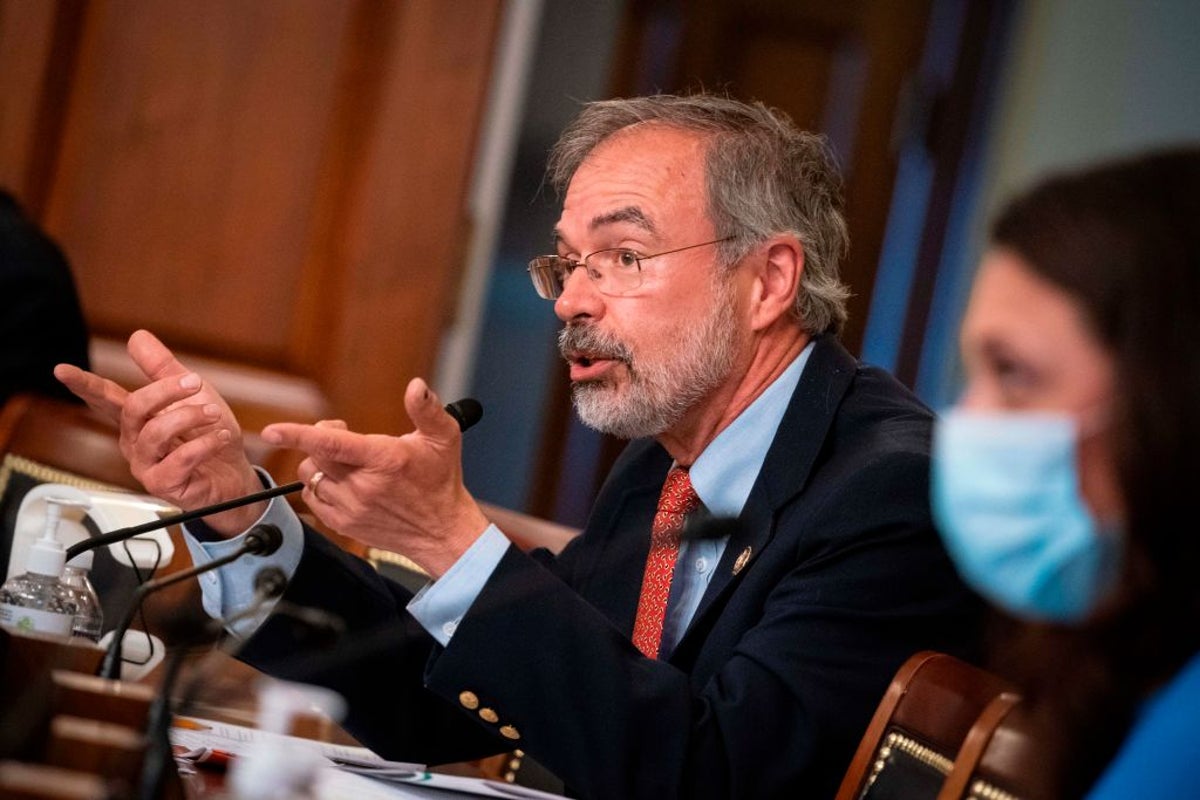
The air in the local town hall didn’t just smell like stale coffee and floor wax; it smelled like betrayal. Representative Andy Harris, a stalwart of the Republican right, stood at the podium in Maryland’s 1st District and looked out at a sea of faces he thought he knew. These were his people. The voters who wore the red hats, who donated twenty dollars they couldn’t afford, and who believed—with a fervor that bordered on the religious—that the border was the single greatest threat to the American way of life.
Then the shouting started.
It wasn't the "usual suspects" from the left. It wasn't activists demanding a path to citizenship or climate change reforms. It was his own base. They weren't cheering his voting record. They were calling him a traitor. The reason? A bureaucratic acronym that sounds like a tax form but carries the weight of a political hand grenade: the H-2B visa.
The Ghost in the Machine
To understand why a room full of conservative voters would turn on one of their own, you have to look past the cable news chyrons. You have to look at the Maryland shoreline.
Consider a hypothetical business owner named Miller. Miller runs a crab-shucking house on the Chesapeake Bay. He is a third-generation waterman. He voted for Donald Trump twice. He wants a wall built high and fast. But Miller has a problem that keeps him up at 3:00 AM: no one in his town wants to shuck crabs. It is grueling, finger-slicing work in a cold, wet room for seasonal wages. If he can’t find forty workers by April, his business—and his family’s legacy—dies.
Miller calls his Congressman. He pleads for more H-2B visas, the legal permits that allow non-agricultural seasonal workers to enter the country, work, and then leave.
Representative Harris, and many of his colleagues in the House Freedom Caucus, listened to the Millers of the world. They pushed for "discretionary" increases in these visas. In their minds, they were saving small businesses. They were being pro-growth. They were being "America First" by keeping American businesses from folding.
But the base sees it differently. They don't see a labor shortage. They see a replacement.
The Math of Discontent
The friction points aren't just ideological; they are mathematical. In the 2024 fiscal year, the government set the initial cap for H-2B visas at 66,000. Under pressure from business lobbies and lawmakers like Harris, the Department of Homeland Security added an additional 64,716 visas.
To a lawmaker, this is a compromise. To a hardline "restrictionist," this is a back door.
The far-right wing of the party, led by influencers and organizations like NumbersUSA and Federation for American Immigration Reform (FAIR), has begun to paint these legal channels as a "silent invasion." They argue that every H-2B worker is a missed opportunity for an American worker to see their wages rise. They argue that if the crab-shucker’s job remains unfilled, the wage should go up until an American takes it.
Economics, however, is rarely that tidy.
If Miller raises wages to thirty dollars an hour to attract a local teenager who would rather work at a climate-controlled Target, the price of a pound of crab meat triples. The grocery store stops buying from Miller. They start buying from overseas. Miller goes out of business. The American job is gone forever, replaced not by a foreign worker, but by a foreign import.
This is the nuance that dies in a screaming match at a town hall.
The Purity Spiral
Politics has a way of eating its own. For years, the Republican party found unity in the word "legal." The mantra was simple: We love legal immigration; we hate illegal immigration. It was a clean, defensible line.
That line has blurred.
The "New Right" has moved the goalposts. They are no longer just concerned with the legality of the entry; they are concerned with the sheer volume of people. To this faction, a million people entering legally is just as damaging to the "national fabric" as a million people crossing the Rio Grande.
When lawmakers like Andy Harris or South Carolina’s Nancy Mace support visa increases, they are operating under the old "legal vs. illegal" framework. They think they are safe because they are following the rules. They are shocked when they find the rules have changed behind their backs.
The betrayal feels personal. It’s the feeling of a husband who discovers his wife hasn't been cheating, but has been funneling their joint savings into a business he hates. It’s still their money, but the trust is shattered.
The Invisible Stakes
Behind the podiums and the protest signs, there is a profound sense of anxiety about what it means to be an American worker in 2026. The world is getting faster. Automation is looming. The cost of a starter home is a cruel joke.
When a voter in a struggling Maryland town sees a busload of seasonal workers arrive, they don't see the H-2B paperwork. They don't see the fact that these workers pay taxes but can't claim Social Security. They see a system that seems to prioritize the "needs of the economy" over the "needs of the citizen."
Lawmakers are caught in a pincer movement. On one side, the Chamber of Commerce warns of an economic collapse if the labor pool shrinks. On the other, a radicalized base warns of a primary challenge if a single new visa is approved.
It is a choice between a slow-motion economic train wreck and a fast-acting political suicide.
The Fracture Lines
This isn't just a Maryland problem. It’s happening in the ski resorts of Colorado, the landscaping companies of Florida, and the hotels of the Jersey Shore. The Republican party is currently a house divided against itself, not by its enemies, but by its own definitions of success.
Is a successful America one where the GDP grows because of a flexible, global labor force? Or is it one where the borders are tight, even if it means the local crab house closes and the price of a vacation doubles?
There is no easy middle ground here. You can’t half-shuck a crab.
The uproar against MAGA lawmakers isn't a glitch; it's a feature of a movement that has outgrown its creators. The populist energy that the GOP harnessed to take power has now turned its gaze inward. It is searching for impurities. It is looking for anyone who prioritizes the "market" over the "member."
As the 2026 midterms approach, the silence from many Republican offices is deafening. They are realizing that the old slogans don't work anymore. "Legal" is no longer a shield. "Business-friendly" is becoming a slur.
In the end, the most dangerous place for a politician to be isn't in the crosshairs of their opponents. It’s in the path of their own supporters who feel they’ve been sold a dream of a closed gate, only to find the side door was left wide open for a fee.
The town hall ends. The lights go out. But the anger doesn't dissipate; it just moves to the parking lot, where the talk shifts from who they used to trust to who they’re going to replace next. The fire that was meant to burn the opposition has started to singe the rafters of the house itself.