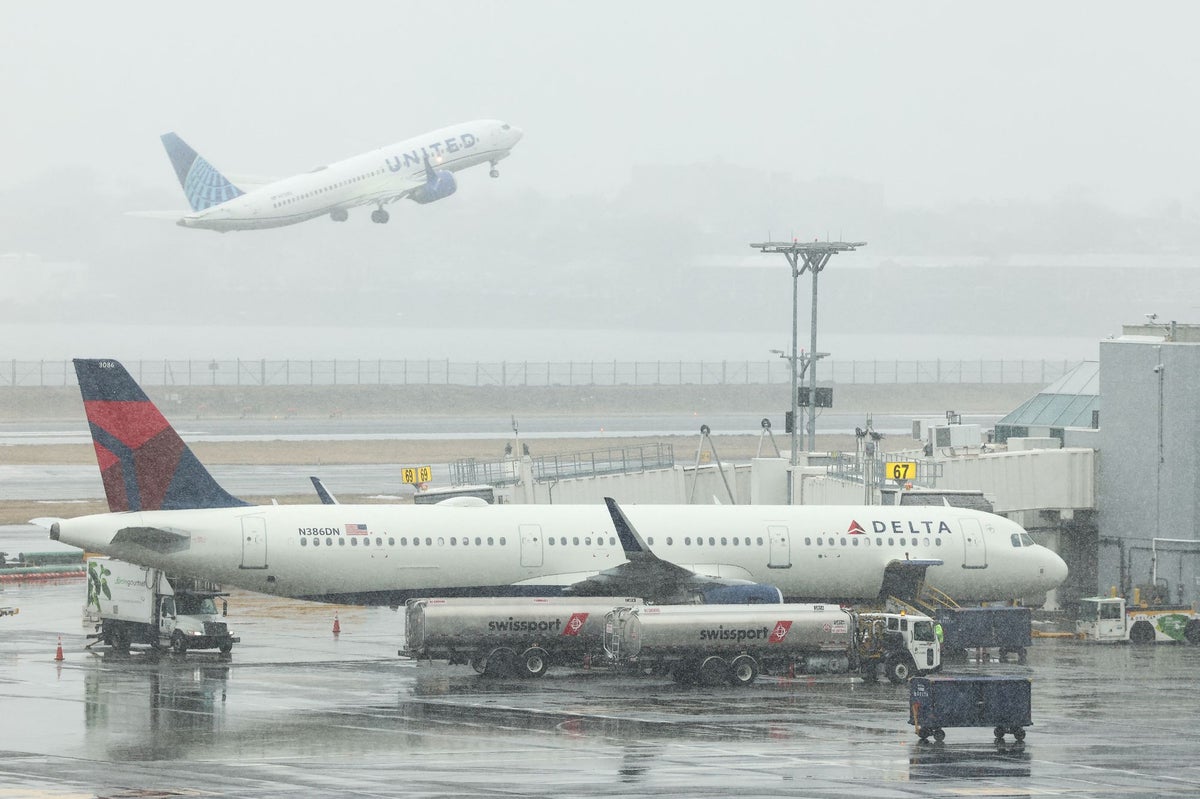
The plastic tray table is a flimsy boundary between a traveler and the abyss. For most of the fifteen-hour haul from Los Angeles to Sydney, that tray table holds nothing more consequential than a lukewarm pasta dish or a half-finished gin and tonic. We trust the aluminum tube. We trust the invisible rivers of air. We trust the seatbelt sign, even when we ignore it to stretch our legs.
But at 35,000 feet, trust is a biological gamble.
On a recent Tuesday, Delta Air Lines Flight 15 was carving its way across the Pacific. It is a route defined by the "blue hole"—a vast, repetitive expanse where the horizon blurs and time becomes a suggestion. For the passengers in the cabin, the world had shrunk to the size of a headrest screen. Some were chasing sleep. Others were midway through a movie they’d forget by landing.
Then the floor disappeared.
It wasn't a dip. It wasn't the rhythmic "washboard" vibration frequent flyers dismiss with a sigh. It was a violent, vertical displacement. In the physics of clear-air turbulence, the aircraft doesn't just move; it ceases to be supported. For a terrifying handful of seconds, gravity becomes the only pilot.
Imagine a flight attendant—let's call her Sarah. She has walked these narrow aisles for a decade. She knows the pitch of the engines and the specific rattle of the galley. She was likely reaching for a used napkin or checking a latch when the world inverted. Without the tether of a seatbelt, a human body becomes a projectile.
Physics is indifferent to career longevity.
When the Boeing 777 hit that pocket of unstable air, the cabin became a chaotic centrifuge. Sarah, along with two of her colleagues, was launched. This is the hidden reality of the "Severe" rating in aviation logs. It isn't just a bumpy ride. It is an environment where unrestrained objects—including people—strike the ceiling with enough force to crack plastic and bone.
The sound is what survivors remember most. It isn't a roar; it’s a series of sharp, sickening thuds. It’s the sound of the overhead bins being tested by the weight of human shoulders. It’s the sound of a hundred gasps being cut short as lungs are pressed against ribs.
When the plane finally caught the air again, biting back into the atmosphere with a jarring shudder, the silence that followed was worse than the noise. Then came the screaming.
The flight didn't turn back. It couldn't. When you are deep over the Pacific, the math of "returning" is often more dangerous than pushing forward. The flight deck made the call to continue to Sydney, turning the remaining hours of the journey into a floating infirmary.
While the pilots wrestled with weather charts to ensure no second strike was coming, the cabin crew—those still standing—had to pivot from service to triage. They are trained for this, yet no amount of simulation prepares you for the sight of your friend and coworker strapped into a jumpseat, clutching a head wound while the Pacific Ocean churns six miles below.
Three crew members were in a state that required immediate intervention. They weren't just "shaken." They were broken.
When the wheels finally touched the tarmac at Kingsford Smith Airport, the flashing lights of ambulances replaced the flickering movies of the cabin. Paramedics climbed the stairs, moving against the flow of exhausted, pale-faced passengers. The three crew members were rushed to a local hospital. They had survived the flight, but the internal map of their professional lives had been permanently altered.
We often treat turbulence as an annoyance—a reason why we can't have our coffee exactly when we want it. We roll our eyes at the pilot's voice over the intercom. We keep our belts loose or unbuckled because "we're fine."
But the atmosphere is an ocean, and we are sailing in its most volatile currents.
Clear-air turbulence is the ghost in the machine. It doesn't show up on traditional radar. It doesn't have the courtesy of a thundercloud to warn you of its presence. It is a product of wind shear, where two bodies of air move at vastly different speeds, creating a jagged, invisible seam. As our climate shifts, these seams are becoming more frequent and more violent. The "smooth" layers of the sky are fraying at the edges.
Consider the stakes for those who work in this environment. For a passenger, a flight is a transition. For the crew, it is a workplace. Their office is a pressurized cylinder moving at 500 miles per hour through a fluid medium that occasionally decides to drop them.
The injury of these three crew members isn't a freak accident. It is a reminder of the thin margin we operate within. Every time you hear the "click-clack" of a hundred seatbelts after the captain speaks, you are witnessing a collective act of defense against a monster we cannot see.
The crew on Flight 15 didn't have the luxury of a warning. They were caught in the seam.
Next time you're cruising over the dark expanse of an ocean, look at the flight attendants moving through the cabin. They are the only ones on that aircraft who are consistently, bravely untethered. They walk the tightrope so we can sit in our chairs and complain about the legroom.
When the plane finally emptied in Sydney, the cleaners found the remnants of the struggle: spilled drinks, abandoned shoes, and the scuff marks on the ceiling where the human cost of the journey was recorded in a split second of weightlessness.
The sky is not a floor. It is a temporary agreement between engineering and the elements. And sometimes, the elements renegotiate the terms without notice.
The seatbelt sign stayed illuminated long after the engines went cold.


