Stop weeping over the blue marble. We have seen it before.
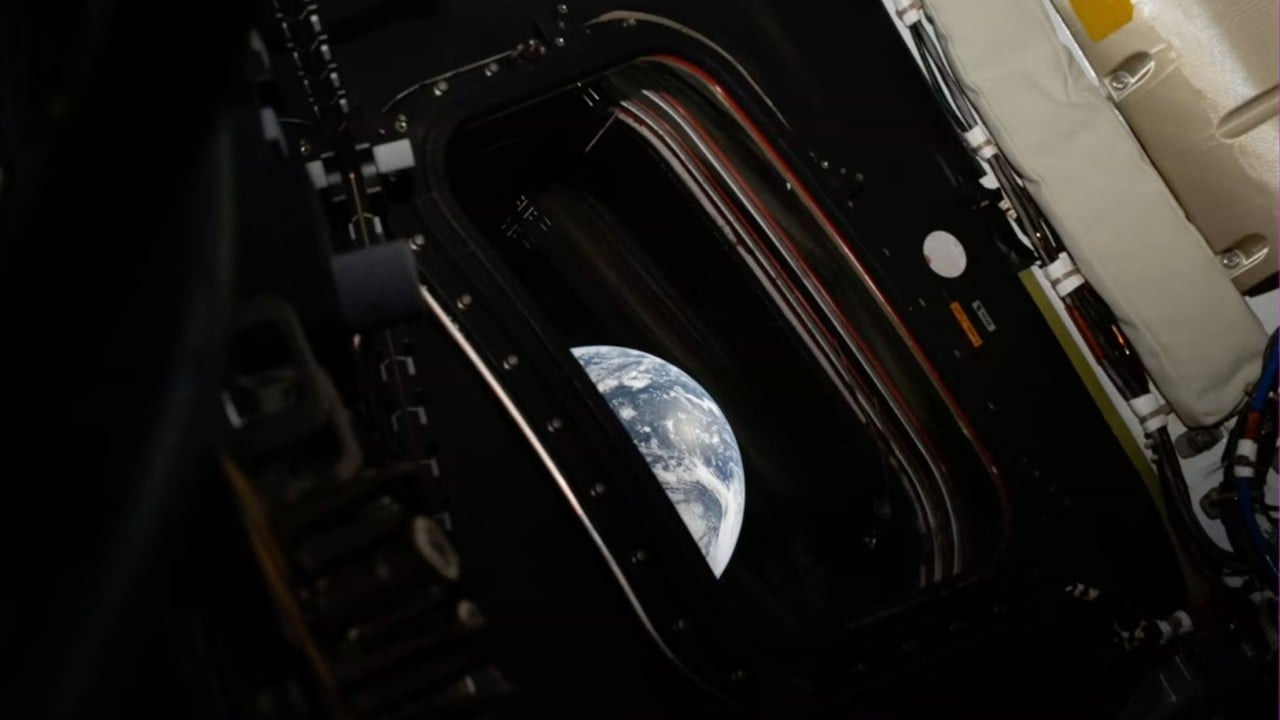
The Artemis II crew just beamed back high-resolution images of Earth, and the internet is doing what it always does: swooning over the "fragility" of our planet. The media calls it a milestone. I call it a distraction. We are currently watching the most expensive photography session in human history, and we are being told to celebrate it as a leap for mankind.
It isn't. It is a nostalgic lap around a track we already mastered fifty years ago.
If you want a picture of Earth from space, look at your phone. Look at the thousands of frames from DSCOVR, the Blue Marble from 1972, or the Pale Blue Dot from Voyager. We do not need to spend billions of dollars and risk four elite lives just to confirm that the Atlantic Ocean is still blue. The "Overview Effect" has become a marketing cliché used to justify why we aren't actually landing anywhere yet.
The Low Earth Orbit Trap
The industry loves the term "incremental progress." It is the polite way of saying we are moving at a snail’s pace while burning a mountain of cash. Artemis II is a flyby. It is a slingshot maneuver. It is the celestial equivalent of driving to the parking lot of a stadium, looking at the lights, and then driving back home without ever seeing the game.
The problem with the current worship of orbital imagery is that it reinforces the idea that space travel is about looking back. True exploration is about looking out.
When Apollo 8 took the "Earthrise" photo, it was a side effect of a radical, terrifying mission to reach the Moon before the Soviets. Today, the photo is the mission. We have inverted the priorities. We are prioritizing the PR department over the engineering department. While we celebrate the "brilliant beauty" of these images, we are ignoring the fact that the Space Launch System (SLS) is an expendable, non-reusable relic of 1970s shuttle tech that costs roughly $2 billion per launch.
The Physics of Waste
Let’s talk numbers. NASA's Inspector General has projected that the first four Artemis missions will cost about $4.1 billion each.
$$C = \frac{L + O + D}{N}$$
If $C$ is the cost per launch, $L$ is the launch vehicle cost, $O$ is ground operations, $D$ is the amortization of development, and $N$ is the number of flights, the math for Artemis is a nightmare. By sticking to expendable boosters, we are effectively building a Ferrari, driving it once, and then pushing it into the ocean.
We are being sold a story of "inspiration," but inspiration doesn't get you to Mars. Reusability does. Refuelable orbital depots do. While NASA shares pretty pictures, companies like SpaceX are actually iterating on the hardware that makes space a place you live, not just a place you visit for a weekend photo op.
The "lazy consensus" is that Artemis II is a necessary step. The reality is that it’s a political compromise. It’s a way to keep the old-guard aerospace contractors happy by using their legacy components while pretending we are doing something new. We are stuck in a cycle of "flags and footprints" logic when we should be talking about industrialization and permanent settlement.
The Sentimentality Tax
Every time a news outlet focuses on the "emotions" of the astronauts or the "stunning vistas" of the home planet, they are helping the government avoid hard questions about the timeline.
Ask yourself why we are still using a heat shield design that hasn't fundamentally evolved in decades. Ask why we are okay with a mission profile that includes a "free return trajectory" that basically ensures we don't have to do any complex orbital insertions if something goes wrong. It’s safe. It’s cautious. It’s boring.
I have watched agencies burn through budgets that could have funded a dozen autonomous mining probes just to put a human face on a mission that doesn't actually require a human pilot. We are paying a "Sentimentality Tax." We want the hero narrative, so we tolerate the inefficiency.
The False Narrative of Fragility
The competitor article likely droned on about how these images remind us that "we are all one" and "the planet is a tiny oasis."
This is the most tired trope in the industry. It’s "Overview Effect" fatigue.
The planet isn't fragile; it’s a four-billion-year-old rock that has survived asteroid impacts and volcanic winters. We are fragile. And the only way to stop being fragile is to become a multi-planetary species. By focusing on how pretty Earth looks from 200,000 miles away, we are reinforcing our psychological tether to it.
We should be looking at the lunar South Pole. We should be obsessing over the Shackleton Crater and the volatiles trapped in the shadows. We should be demanding images of the lunar regolith being processed into oxygen.
Instead, we get more blue-tinted wallpaper.
Stop Asking "How Does It Feel?"
If I hear one more journalist ask an astronaut "What was it like to see the Earth?" I will lose my mind.
It is the wrong question. We should be asking:
- What was the delta-v variance during the trans-lunar injection?
- How did the life support systems handle the radiation spikes in the Van Allen belts compared to the predicted models?
- Why are we still using a capsule-based recovery system that requires the entire U.S. Navy to go fishing in the Pacific?
The status quo is a loop. We launch, we photograph, we splash down, we parade. Then we wait five years to do it again.
We don't need more "brilliant beauty." We need more heavy lift capacity. We need more nuclear thermal propulsion. We need to stop acting like tourists and start acting like pioneers.
If you want to be inspired, don't look at the photo of the Earth. Look at the engineering schematics of the docking mechanism. Look at the fuel consumption charts. Look at the things that actually bridge the gap between "visiting" and "staying."
The Earth is beautiful. We get it. Now turn the cameras around and show us where we are going, or get out of the way for someone who will.
Take the picture, post it to Instagram, and let’s move on. We have a solar system to colonize, and we’re currently stuck in the driveway taking selfies.